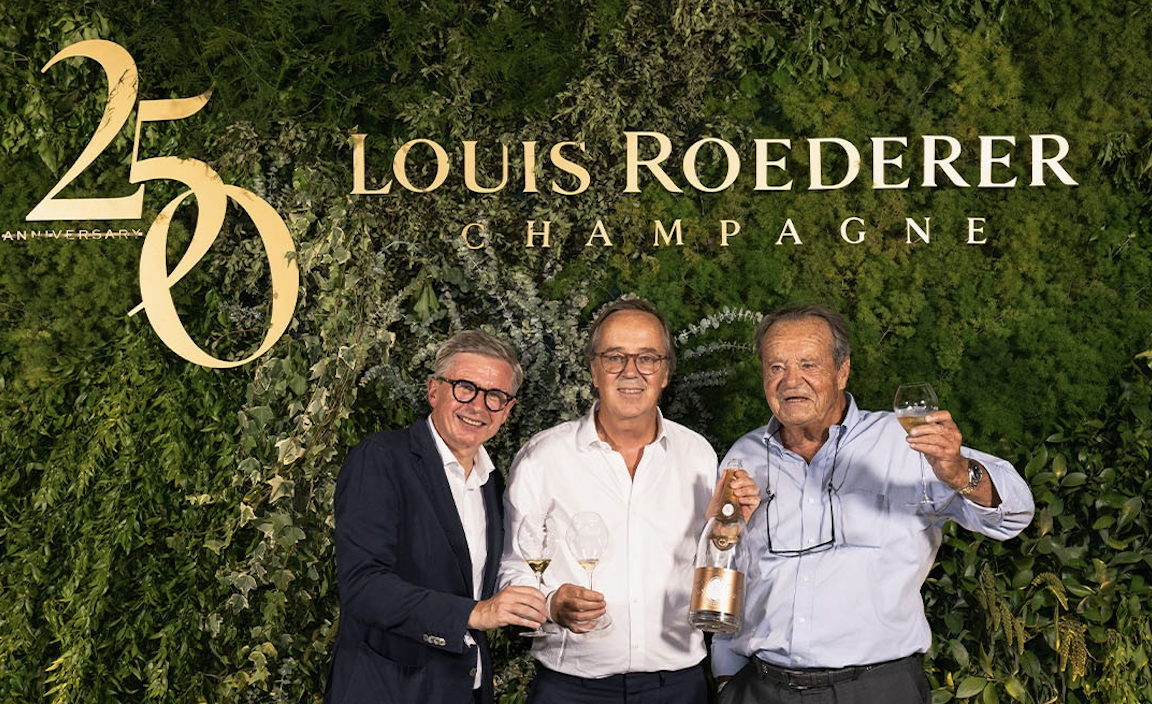
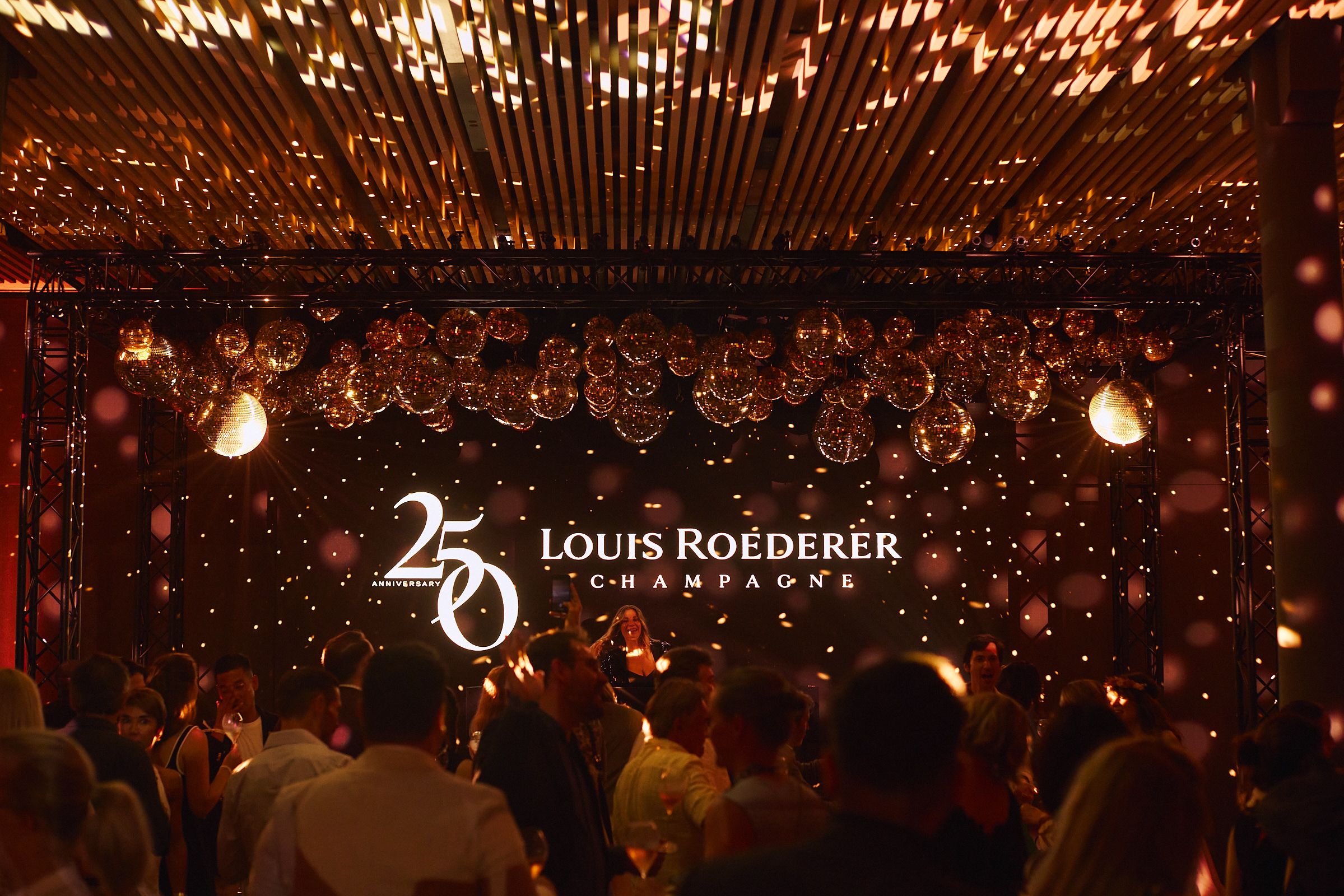
Two and a half centuries of history celebrated in Reims through wine, art, photography, music, dance and cuisine. To mark its 250th anniversary, Louis Roederer chose above all to tell the story of what connects the generations, the people and the places of the Maison. An idea distilled into three words: “Créer, c’est aimer”.
In 2026, Louis Roederer celebrates 250 years of history. Frédéric Rouzaud, representing the seventh generation of the family, sees this anniversary above all as a bond with those who built the Maison before him: Louis Roederer, who gave it his name in the 19th century and provided decisive impetus to its development; Camille Olry-Roederer, who played a leading role in its revival during the 20th century; Jean-Claude Rouzaud, who further strengthened its commitment to quality and viticulture; and, alongside them, all the women and men who have contributed to its evolution since 1776.
It is from this idea of transmission that “Créer, c’est aimer” was born, the thought chosen to accompany the anniversary.
For Rouzaud, time at Louis Roederer is a “living material”: the time of the vineyard, of observation, of waiting, of transmission and of creation. A vision inseparable from the Maison’s family independence, because it is precisely this independence that makes it possible to resist the pressures of immediacy and preserve freedom of choice.
“To create a great wine means loving the land that gives rise to it, loving the vine, loving the patient gestures that accompany it, loving the women and men who devote their talent to it,” Rouzaud says.
This is the thread that runs through two and a half centuries of history.
Today, the estate comprises 250 hectares, located primarily in the Premier and Grand Cru villages of the Montagne de Reims, Vallée de la Marne and Côte des Blancs, divided into more than 420 plots. Of these, 135 hectares are certified organic, making it the largest certified organic vineyard in Champagne. This reflects the continuity of a philosophy that Jean-Baptiste Lécaillon, Cellar Master and head of the vineyards, has progressively steered towards viticulture increasingly focused on soil vitality, biodiversity and vine resilience.
To celebrate this heritage, Roederer chose to bring vineyards, wines and family memory into dialogue with contemporary creation.
Reims, the story comes to life
More than 600 guests from around the world gathered in Reims, including employees, partners, clients and leading figures from the worlds of wine and culture.
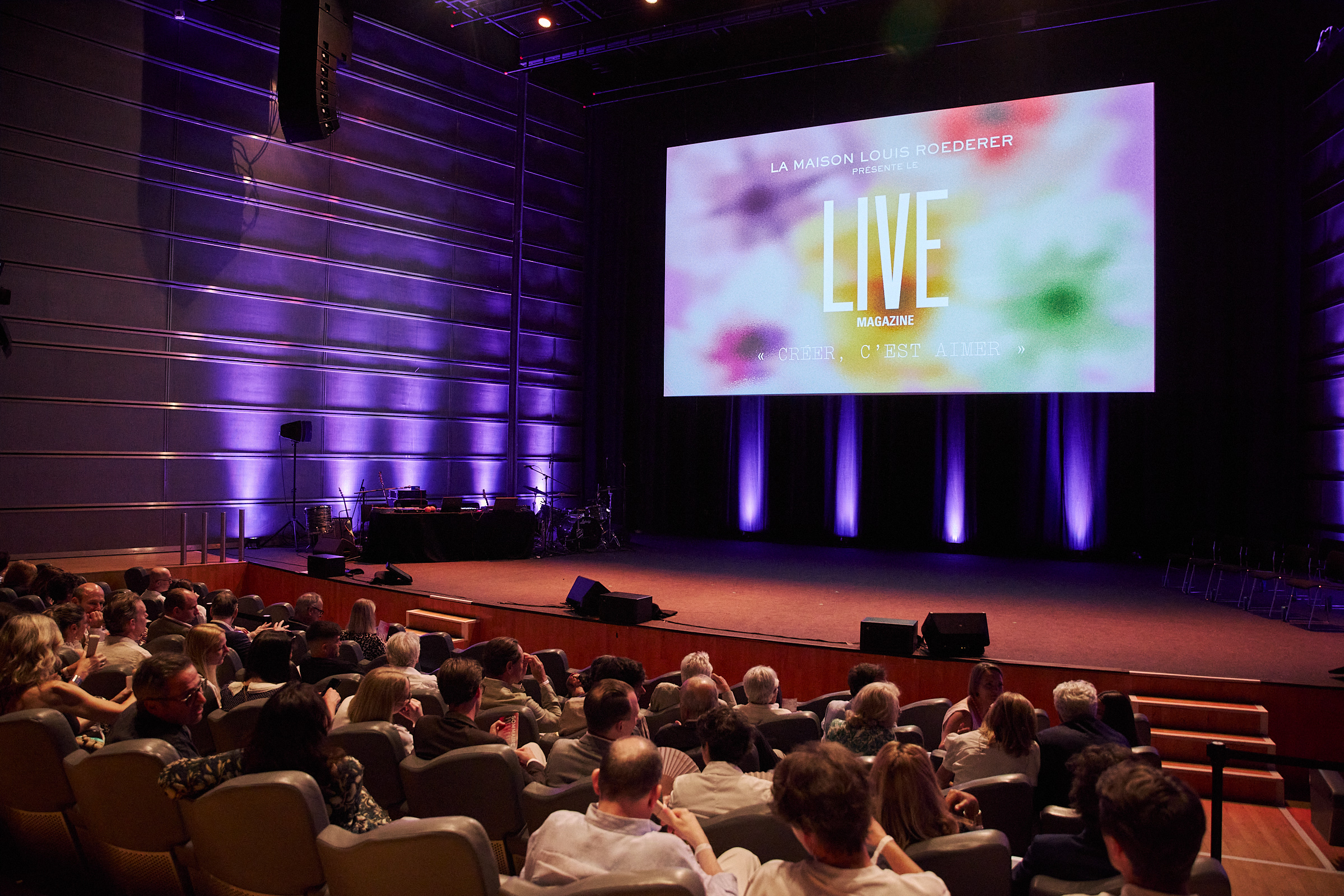
One of the central moments was Créer, c’est aimer, the Live Magazine, presented at the Centre des Congrès: a live narrative shaped through words, images, photography, music and dance. Among those taking part were Peter Liem, Barbara Iweins, Jean Boucault and Johnny Rasse, Oan Kim, Mathieu Ganio, Alice Renavand, Lee Shulman and Aurélie Sfez.
The encounter between different forms of expression conveyed the same idea that runs through the anniversary: memory and the present not as separate worlds, but as parts of a story that is still capable of generating something new.
The Hôtel Particulier, art and memory
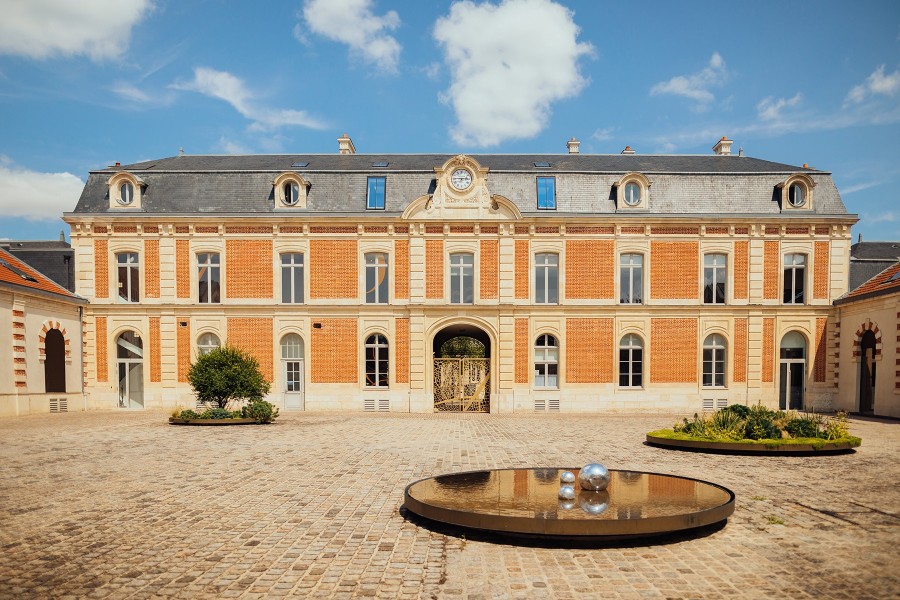
The celebration continued at the Louis Roederer Hôtel Particulier on Boulevard Lundy, the family residence in Reims, where artist Bianca Bondi created an immersive installation conceived for the anniversary. Extending from floor to ceiling, the work transformed the rooms into a dreamlike, organic landscape through constantly evolving materials and crystallisations, evoking the long passage of time that is also integral to the making of Cristal. On 27 and 28 June, the Maison exceptionally opened the residence to the public, before work begins on its future transformation.
Lee Shulman, the British photographer and filmmaker who founded The Anonymous Project, created Family Matters, bringing together personal photographs of employees, vignerons, artisans, partners and friends of the Maison.
Assembled in a large illuminated stained-glass installation, the images form a collective portrait of Louis Roederer through the people who share in its history. Following the celebrations, the work will be permanently installed in the corridor of the Maison’s cellars.
The cuvées of the celebration
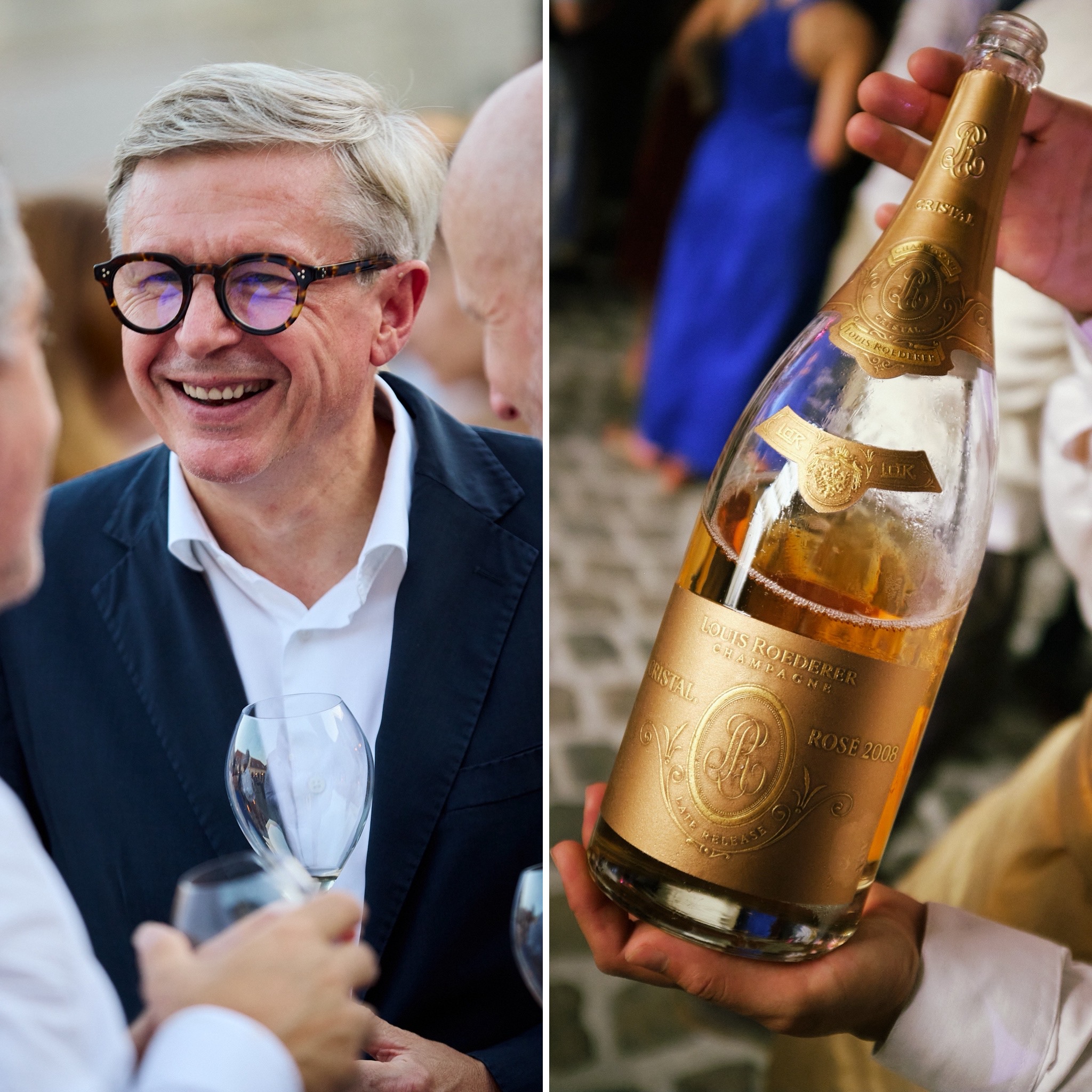
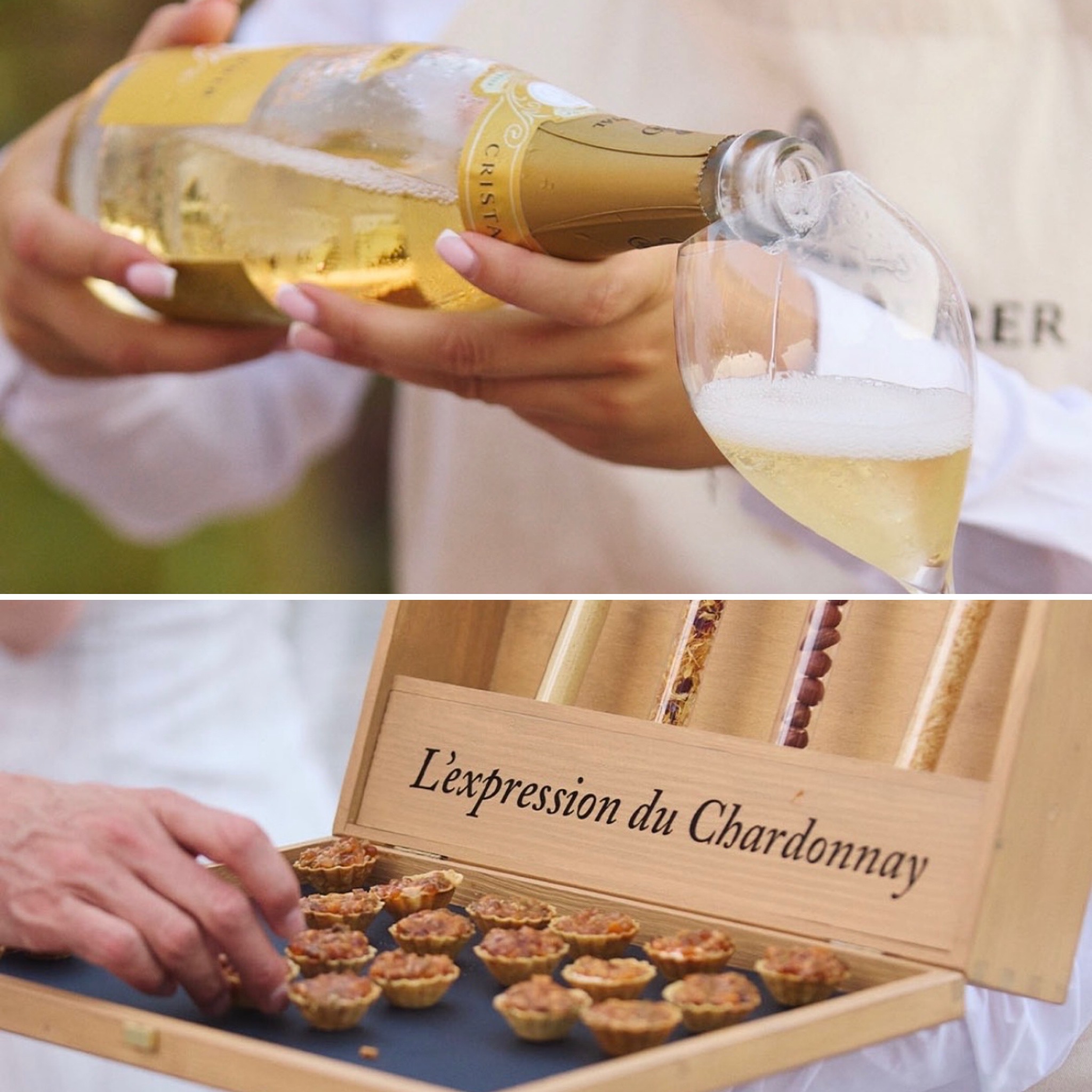
Among the wines selected for the 250th anniversary, the line-up included Collection 247 and Carte Blanche 246, followed by Cristal 2018, Cristal 2013 in magnum, Cristal Rosé 2014 in magnum, Cristal Late Release 2008 in magnum and Cristal Rosé Late Release 2008 in magnum.
It was a sequence entirely consistent with the theme of the anniversary, exploring different interpretations of time according to Louis Roederer: from the multi-vintage construction of Collection to the identity of Cristal and Cristal Rosé, through to the Late Release wines, where extended ageing on the lees opens up a different perspective on the wine’s evolution.
The aim, therefore, was not simply to compare wines of different ages, but to observe the different ways in which Roederer shapes the relationship between wine and time.
It is above all with Cristal Late Release 2008 that this theme takes on a distinctly oenological significance. For Jean-Baptiste Lécaillon, 2008 represents one of the benchmark expressions of the cuvée, what the Cellar Master has described as the “Cristal of Cristals”: a vintage in which intensity, precision, energy and depth seem to bring the wine back to its very essence.
In Lécaillon’s interpretation, time does not act upon wine according to an indefinite progression. Initially, there is a time of addition, during which ageing builds complexity, depth and dimension; then comes a point when the process can turn into subtraction, as certain components begin to lose definition. The work of the cellar, therefore, is not simply to prolong the wait, but to understand how far time can enhance the wine while preserving its energy and identity.
The extended ageing on the lees of the Late Release wines should also be understood from this perspective. In Cristal 2008, the poignettage carried out before remuage, gently bringing the yeasts back into suspension, forms part of this pursuit, encouraging further interaction between the wine and the lees before disgorgement.
Yet for Lécaillon, the origin of Cristal remains, above all, the vineyard. “L’enfant de la craie”, the child of the chalk: this is how he describes it, tracing the cuvée back to the calcareous matrix of its terroirs. It is in the relationship between roots, soil and subsoil that Roederer seeks the combination of salinity, energy and precision that constitutes one of Cristal’s signatures.
The progressive conversion of the vineyards towards organic, biodynamic and regenerative practices thus takes on a deeper significance: not simply the application of an agronomic model, but an attempt to make the expression of place increasingly legible, particularly in the face of a changing climate that is altering Champagne’s historic balances.
The time of the bottle thus returns to the time of the vineyard: from chalk to vine, from grape to wine, from wine to lees. A journey that gives the theme chosen for the anniversary a tangible viticultural and oenological dimension.
Cristal 2008 Late Release Magnum
Disgorgement took place in March 2022, after thirteen years of ageing on the lees, with a dosage of approximately 7 g/l. The distinctive character of this Late Release therefore lies in its extended period sur lies, followed by almost four further years of rest in the cellars in Reims before release.
Cristal 2008 retains a remarkable youthfulness. Luminous, fresh and vertical, it reveals an imposing structure, perfectly balanced by its mineral dimension. The texture is exceptionally fine and the intensity remarkable; a profound umami dimension adds breadth and complexity, while the ripeness of the fruit intertwines with the strength of the chalk. Salinity gradually accompanies its development, leading towards an exceptionally long, pure and precise finish. A Cristal of extraordinary elegance, in which power and delicacy find a natural synthesis.
Cristal Rosé 2008 Late Release Magnum
Cristal Rosé 2008 is composed of 54% Pinot Noir and 46% Chardonnay; 16% of the wines underwent malolactic fermentation, while 17% was vinified in truncated-conical oak foudres. Disgorgement took place in March 2022, after thirteen years of ageing on the lees, with a dosage of approximately 8 g/l. Since then, the wine has continued its evolution for almost four years in the Maison’s cellars.
It is a Champagne of great purity and verticality, in which the richness of Pinot Noir meets the precision of Chardonnay. The fruit retains remarkable freshness and an impressive expressive luminosity; the texture, subtle and refined, is supported by profound and perfectly defined substance. The chalk imparts rhythm and momentum, while salinity runs throughout its development, gaining intensity towards an exceptionally long and persistent finish. Sumptuous in its depth, Cristal Rosé 2008 retains an almost weightless finesse, in a masterful balance of energy, elegance and delicacy.
The year 2026 also marks 150 years since the creation of Cristal, first made in 1876 for Tsar Alexander II, and the 15th anniversary of the Fondation Louis Roederer. Three anniversaries—the Maison’s 250th, Cristal’s 150th and the Fondation’s 15th—that Roederer has chosen not to separate, regarding them instead as different expressions of the same story, bound to time, transmission and the ability to continue creating.
The Champagnes were paired with the cuisine of Philippe Mille, through a menu conceived in harmony with the cuvées served and with the different forms of creative expression that accompanied the event.
Continuing to Create
Louis Roederer’s 250th anniversary thus tells the story of a Maison that continues to evolve while remaining firmly rooted in independence, identity and a connection to its origins. As Frédéric Rouzaud writes, “the most beautiful way to remain faithful to our past is to continue creating.”