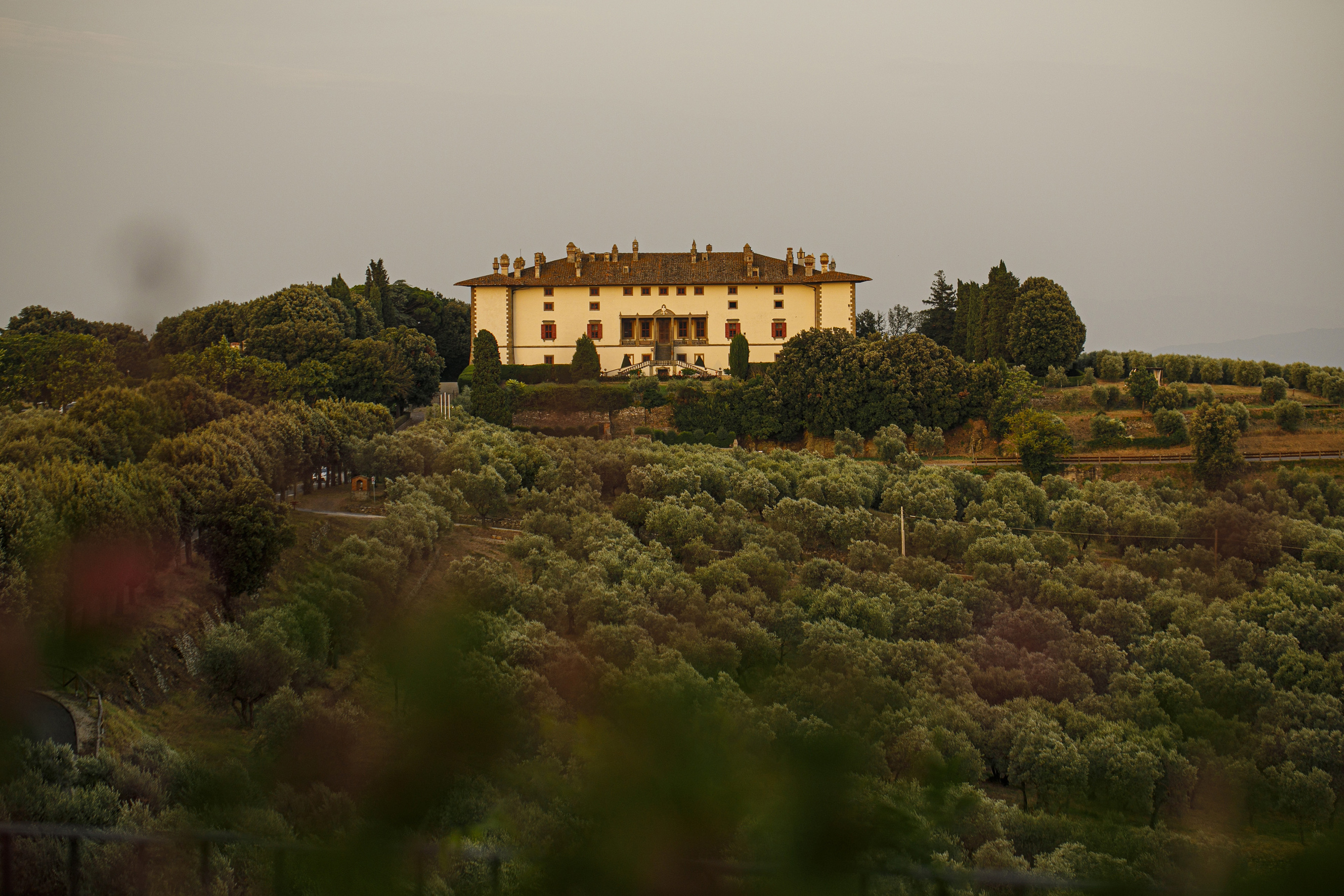
Ancient Etruscan settlement, later a medieval village and subsequently a Medici residence and vast hunting estate – the celebrated Barco Reale – Artimino preserves a millennia-old history. In 1626, the Medici family enclosed the entire perimeter with a defensive wall extending over 51 kilometers, of which significant traces are still visible today. History, culture, art, and nature make the Artimino Estate a place of the soul, where time seems to slow down and the silence of the hills accompanies the gaze. A unique microcosm in the heart of the Tuscan countryside, capable of blending scenic beauty with historical memory.
Within the estate, which spans over 732 hectares, the Medici Paggeria – an elegant boutique hotel created from an early 17th-century building – coexists harmoniously with restaurants, the apartments of the medieval village of Artimino, the spa and wellness center, the country residences, the agricultural estate, the cellars, the Etruscan Museum and, the beating heart of the property, the Medici Villa La Ferdinanda.
The Villa was built in 1596 at the behest of Grand Duke Ferdinando I de’ Medici, based on a design by Bernardo Buontalenti, architect, sculptor, painter and military engineer, among the most influential figures of the late Renaissance. Extraordinary personalities such as Leonardo da Vinci and Galileo Galilei stayed within its walls; in 1608 Galileo was invited here to instruct the young Cosimo “in mathematics.” In 2013, the Medici Villa La Ferdinanda was granted UNESCO World Heritage status.
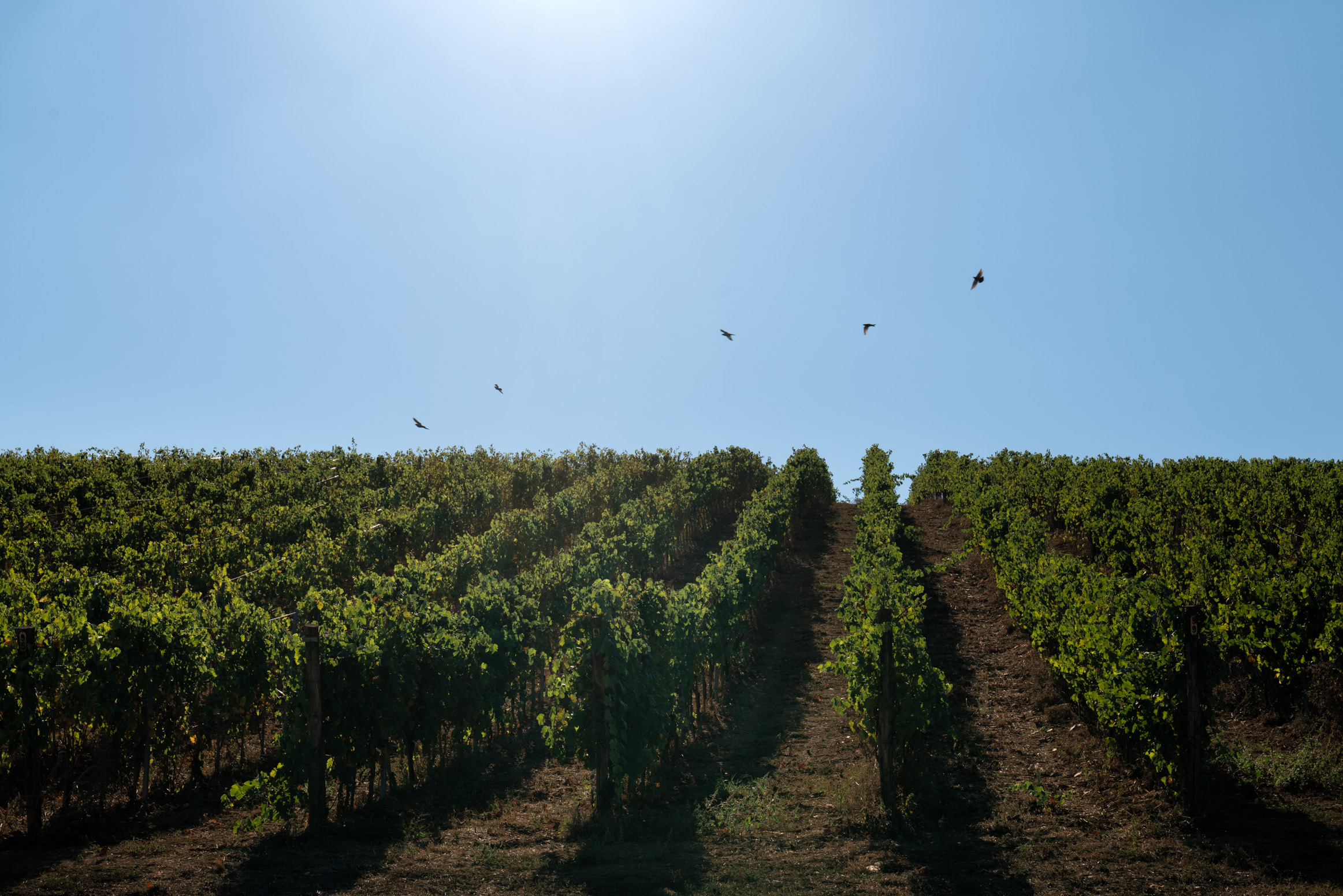
Overlooking the Montalbano hills and the surrounding vineyards, the Villa rises in an area that the Etruscans had consecrated as a sacred site. Here, history, art and nature merge into a rare equilibrium, echoing an ancient civilization and a past that still resonates today. The landscape alternates vineyards, olive groves, cultivated fields and areas of unspoiled nature, composing an agricultural and environmental mosaic of extraordinary harmony.
Since 1989, the estate has been owned by the Olmo family. It was Giuseppe Olmo, legendary cyclist of the 1930s, Olympic champion and hour record holder, as well as a visionary entrepreneur, who first grasped the potential of Artimino. Falling in love with the place, he decided to transform it into a hub of refined hospitality, excellence in agricultural production, authentic gastronomy and high-level viticulture. Today, this vision is carried forward by his grandchildren, Annabella Pascale and Francesco Olmo.
At the core of the estate’s production philosophy lies a conscious and sustainable approach to agriculture. Wine is born first and foremost in the vineyard: targeted interventions, reduced invasive practices, the elimination of chemical herbicides and a constant focus on soil balance represent both technical and ethical choices, aimed at preserving the identity of the territory.
The Artimino Estate encompasses approximately 80 hectares of vineyards, in an area where vine cultivation dates back to Etruscan times. The territory expresses itself through varieties such as Sangiovese, Cabernet Sauvignon, Merlot, Syrah and Malvasia. The grapes are the result of careful and respectful viticulture, supported by a strong culture of environmental sustainability and advanced agronomic research aimed at identifying the most suitable parcels for each grape variety. This work has also been carried out with the support of Professor Attilio Scienza and winery director Vincenzo Ercolino, with the goal of fully enhancing the qualitative potential and the territorial imprint of the wines.
In the cellar, under the guidance of Riccardo Cotarella, each variety is followed with artisanal precision. Tradition engages in dialogue with technical expertise to accompany the wine along its ageing path, respecting its aromatic profiles and personality, so that it can express its identity with clarity.
The estate lies within the production area of Carmignano DOCG, one of Italy’s oldest appellations and the smallest among the national DOCGs, with just over a dozen producers and extremely limited production. The regulations require the assemblage of Sangiovese and Cabernet Sauvignon or Cabernet Franc, giving rise to wines of strong character and great historical depth. Documents dating back to 1396 already attest to the fame of Carmignano, appreciated on the tables of European courts.
We tasted several labels from the estate, authentic expressions of this territory, characterized by intense aromatic profiles and a marked territorial identity.
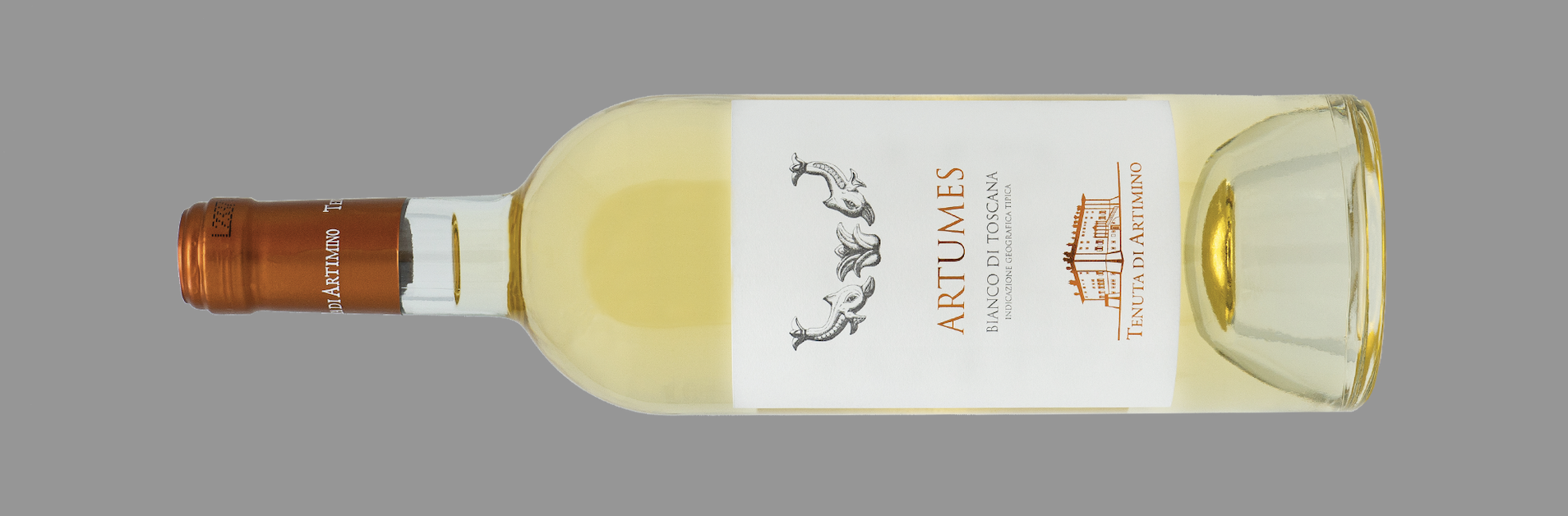
Artumes – Toscana White IGT 2024 Blend: 70% Trebbiano, 30% Petit Manseng
Artumes takes its name from the ancient Etruscan village of Artimino, an area historically devoted to viticulture since pre-Roman times. The vineyards are rooted in sandy-silty alluvial soils of Arno River origin, alternating with layers of clayey marls: deep, well-structured soils, free of coarse fragments and characterized by high water-retention capacity, elements that favor gradual ripening and complex aromatic profiles.
On the visual examination, it shows a bright straw yellow color with greenish highlights. On the olfactive side, the profile is broad, expressive and layered, with an intense fruity and aromatic matrix: green apple, pear, fresh mirabelle plum, quince, yellow peach, hints of nectarine and a subtle exotic trace of papaya and lychee. A dense citrus weave recalls kumquat, adding depth and aromatic precision. The bouquet is completed by delicate floral notes and extremely fine spicy touches of nutmeg. On the palate, it is round and harmonious, supported by a fine acidic tension that defines its gustatory rhythm. The structure develops on an elegant savory framework, accompanied by a slight tactile creaminess that enhances the perception of volume. Minerality emerges progressively, contributing to a dynamic and vibrant length. The finish is clean, taut and persistent, with a fresh closure that evokes balance and verticality. The length is well defined, with an overall sensation of precision and finesse. In terms of style and gustatory approach, Artumes recalls the elegance of the great white wines of the Loire Valley, with a refined, detailed profile built around freshness.
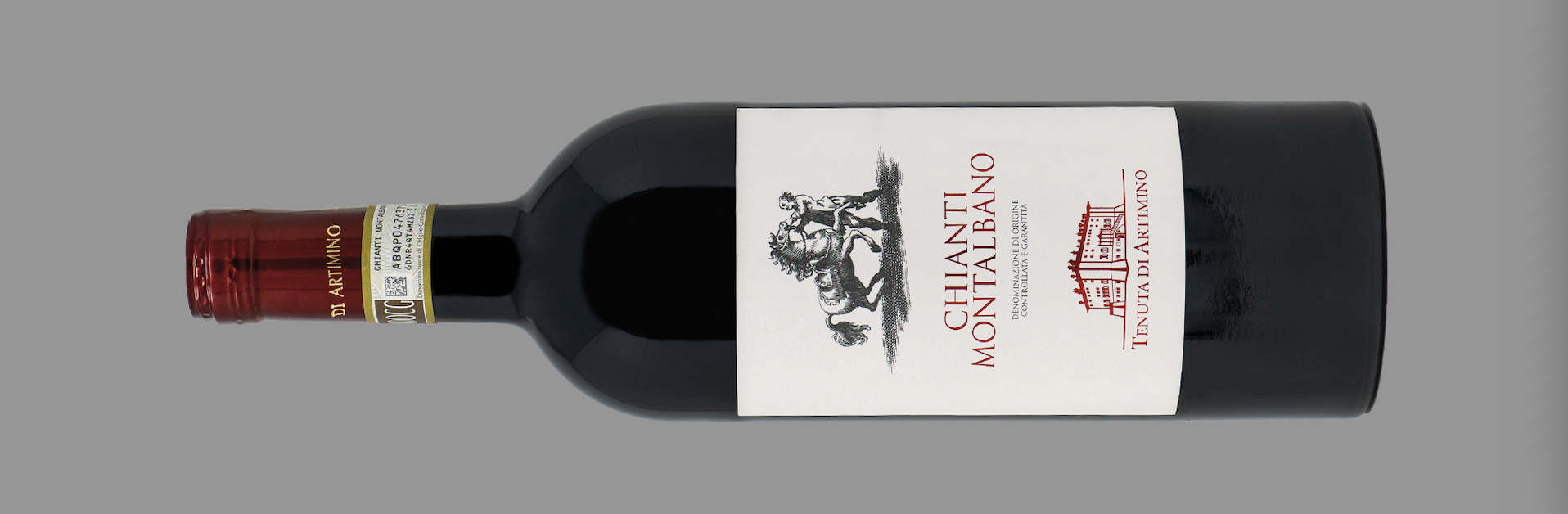
Chianti Montalbano represents one of the historical souls of the Chianti denomination. In 1932, seven subzones were officially recognized, including Montalbano, while the entire Carmignano area was incorporated into the Chianti DOC perimeter. However, the viticultural vocation of this territory is documented as early as 800 AD, during the Carolingian era, bearing witness to an ancient and deeply rooted winemaking tradition.
From a geological perspective, the soils of Chianti Montalbano display a moderately deep structure, with origins dating back to the Sillano Santa Fiora formation (70–100 million years ago). Their composition is rich in sedimentary rocks and clayey marls, with a good presence of coarse fragments, on silty-sandy matrices characterized by a significant clay component. This pedological structure promotes water balance, root aeration and gradual ripening.
Vinification and ageing The grapes are harvested, crushed and destemmed, then transferred to stainless steel tanks for alcoholic fermentation at controlled temperatures. Macerations are kept relatively short to avoid excessive extraction and to privilege fruit expression. The varieties are vinified separately as single varietals, allowing each grape to express its identity to the fullest.
Sangiovese ages for approximately ten months in 40-hectoliter Slavonian oak casks, while Cabernet Sauvignon and Merlot complete their ageing in second-passage barriques, contributing additional aromatic complexity without overpowering the fruit. This is followed by blending and a further ageing period of around four months before bottling.
On the visual examination, it shows an intense, bright ruby red color. On the olfactive side, the profile is inviting, dominated by plum, sour cherry, cherry and marasca cherry, accompanied by elegant floral nuances of rose and violet. Subtle herbal notes emerge, with hints of tomato leaf, balsamic accents and fine spice notes of clove. The bouquet is enriched by more complex aromas of cocoa and coffee, with a delicate menthol imprint that adds freshness. On the palate, it develops on a fine acidity typical of Sangiovese, which imparts momentum and verticality. The tannins are well integrated and silky, contributing to a harmonious gustatory balance. The finish is persistent, with balsamic echoes and a subtle almond-like closure that extends the aftertaste. An intense, well-balanced sip with excellent drinkability.
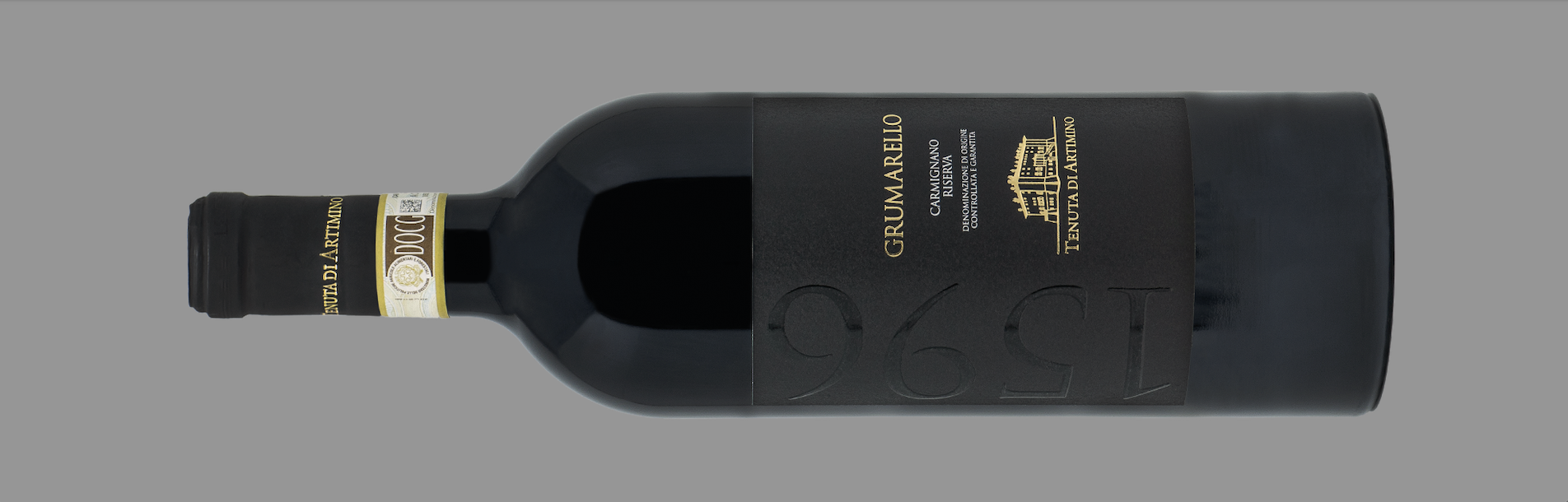
Grumarello takes its name from the historic estate-owned vineyard, once vinified as a single parcel and originally known as “Vigna Grumarello.” Today, the Riserva cuvée is the result of a more articulated blend and is produced exclusively in the best vintages, with the aim of representing the qualitative pinnacle of Carmignano according to the Estate’s style.
The soils of the Grumarello vineyard are dominated by the Macigno geological formation, a Tuscan sandstone of relatively recent origin (around 30 million years), capable of imparting structure and finesse to the wine’s profile. The vines are located at approximately 110 meters above sea level, on silty-sandy soils with a significant clay component, favorable to progressive ripening and to a natural balance between concentration and freshness.
Vinification and ageing Fermentation takes place in stainless steel tanks at controlled temperatures, with each variety vinified separately. Maceration, lasting 15–20 days, allows for the gentle extraction of the finest and most velvety tannins. At the end of alcoholic fermentation, the best lots are transferred to casks and barriques, where malolactic fermentation is completed.
Sangiovese ages in 50-hectoliter Slavonian oak casks, while Cabernet Sauvignon, Merlot and Syrah mature in barriques, partly new and partly second-passage, for approximately 24 months. This is followed by a minimum bottle ageing of six months prior to release.
On the visual examination, it shows an intense and deep ruby red color. On the olfactive side, the profile is broad, seductive and layered: ripe black fruit, sour cherry in spirit, morello cherry and plum intertwine with notes of ripe berries and floral nuances of wild violet. The spicy component emerges with elegance through hints of clove and delicate sweet notes of vanilla. The bouquet is further enriched by tertiary aromas of tobacco, leather and subtle evolutionary nuances, adding depth and complexity.
On the palate, it opens with a Bordeaux-inspired structure, broad and full-bodied, then evolves toward a more typically Tuscan expression, built on elegance, tension and tannic precision. The tannins are extremely fine, enveloping and perfectly integrated. Freshness supports the gustatory progression, while sapidity accompanies the final extension, creating an engaging dialogue between the saline component and the natural sweetness of the fruit. The persistence is long, articulated and harmonious, with a balanced and vibrant finish.
Manlio Giustiniani
🔗 Discover more about Tenuta di Artimino and its wines: 🌐 www.artimino.com