Cortile Spirito Santo: Ortigia between Memory and the Mediterranean
20
Oct 2026
Condividi su:
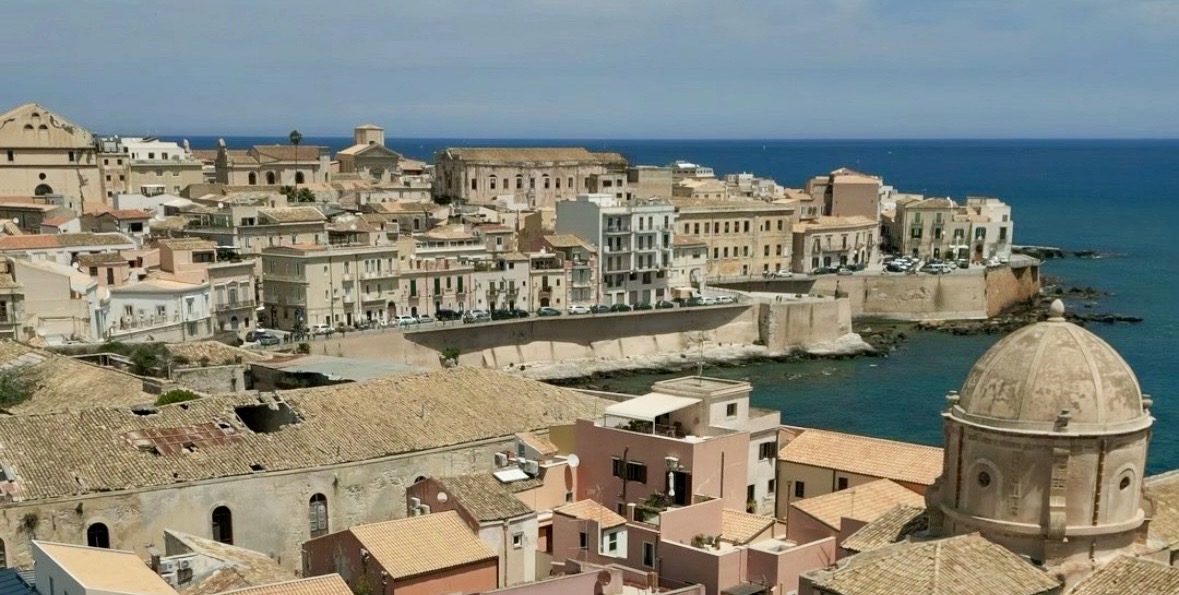
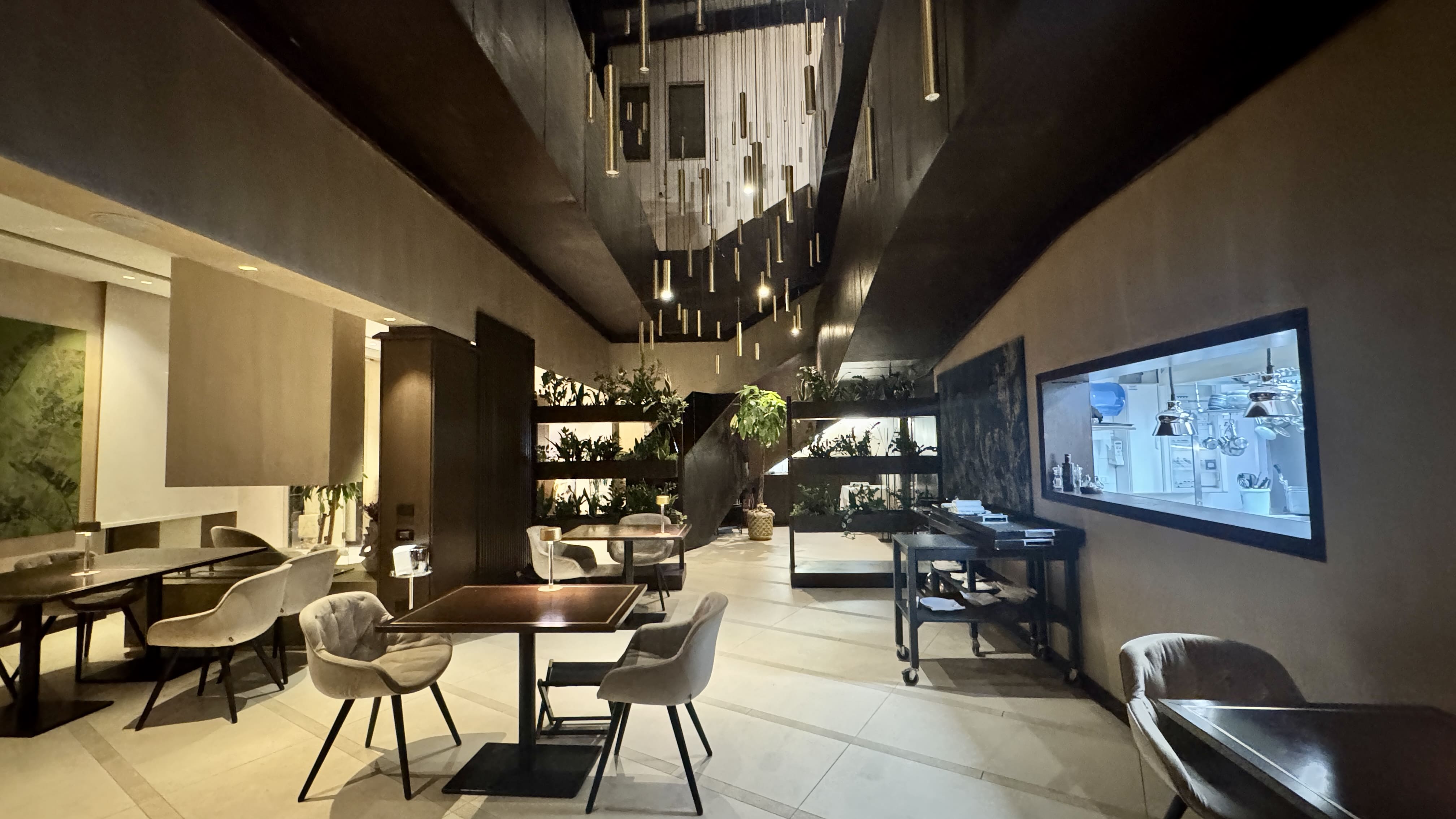
Ortigia, the pale stone of its palazzi, the light of Syracuse and the Mediterranean accompanying almost every view. It is in this setting, within the seventeenth-century residence of Palazzo Salomone, that Giuseppe Torrisi has built the identity of Cortile Spirito Santo over the past few years, a restaurant awarded one Michelin Star. A profoundly Sicilian cuisine, where the sea meets the plant world and memory becomes material to work with, transform and create.
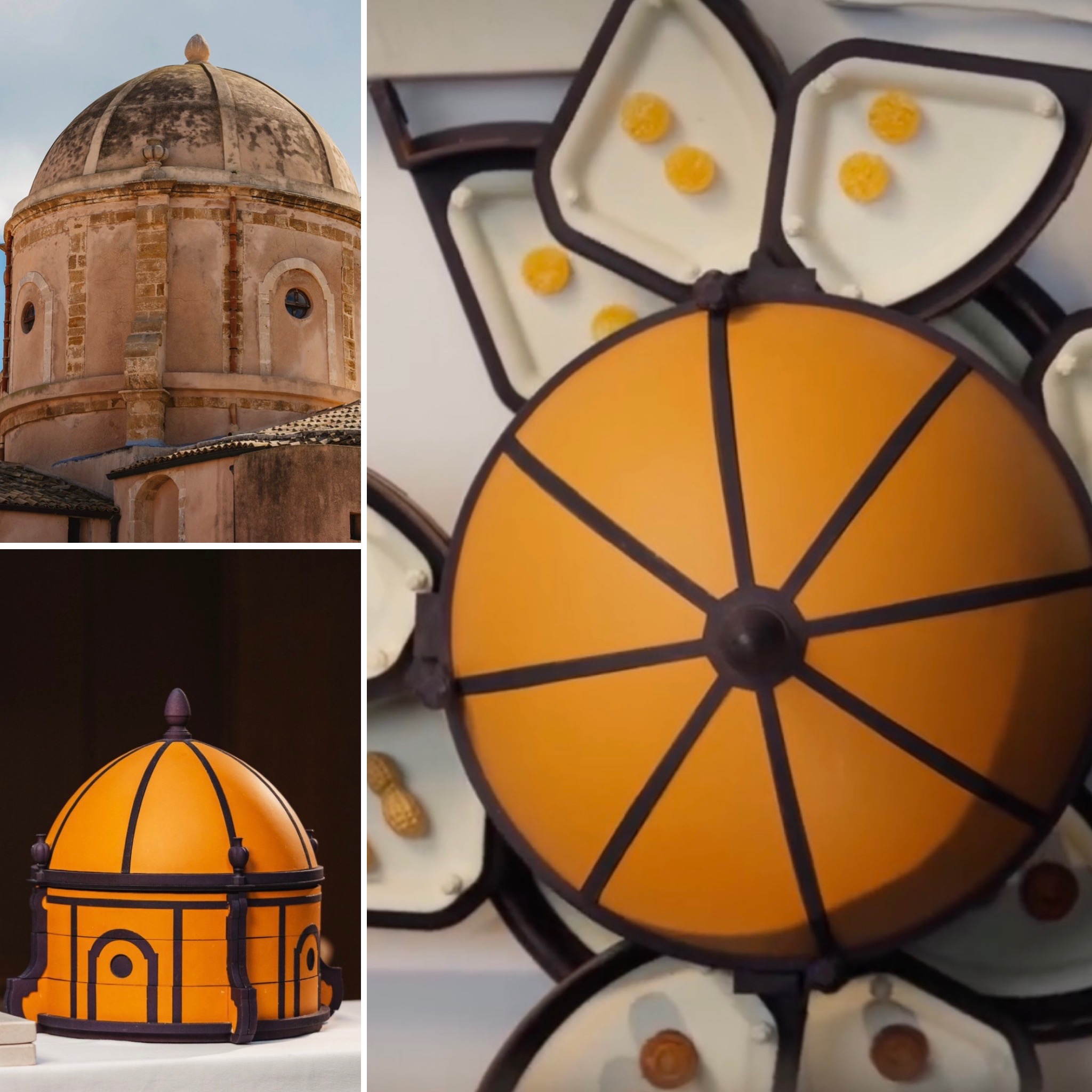
Palazzo Salomone stands in the southern part of Ortigia, a short distance from Castello Maniace and behind the Church of the Holy Spirit. Restored and reopened in 2020, it retains the character of the historic building. What distinguishes this corner of Palazzo Salomone is the church’s distinctive external dome, the architectural presence from which Cortile Spirito Santo takes its name.
Cortile Spirito Santo was founded that same year from a project by Francesco Boscarino, Elisa Di Giorgio, Simona Castelluccio and Luigi Latino, built around the encounter between hospitality, culture and haute cuisine. In November 2023 came the Michelin Star, the first ever awarded to a restaurant in the city of Syracuse.
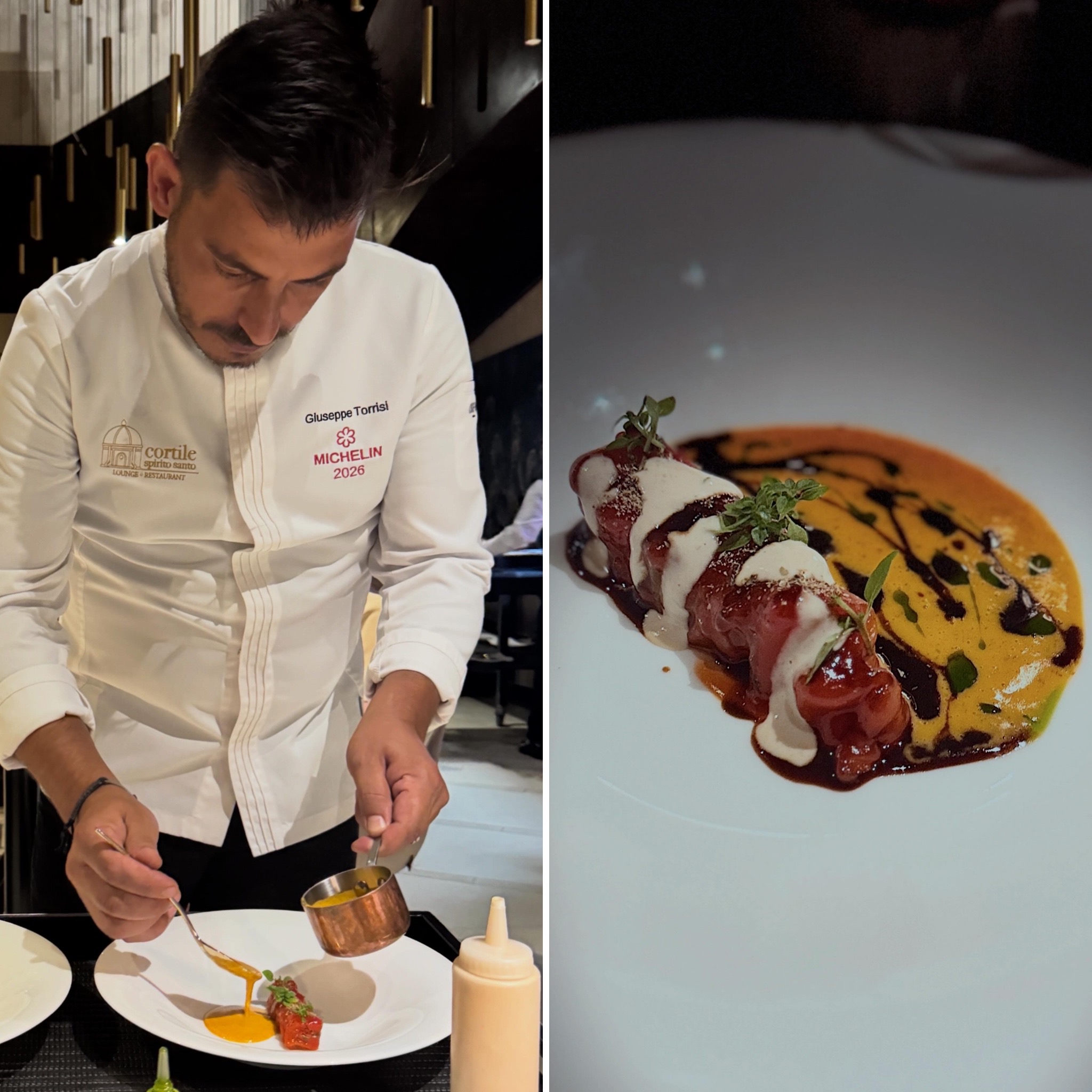
At the helm of the kitchen is Giuseppe Torrisi, who over time has defined a language in which Sicily remains the constant point of reference. Sea, vegetables, citrus fruits, fruit and wild herbs form the heritage upon which he works through technique and contemporary sensitivity, always keeping the connection with his homeland clearly recognisable.
It is often the simplest ingredients that offer the most interesting possibilities. Textures, temperatures and concentrations alter their perception without erasing their original flavour. The technique may be complex, but it remains a tool, just as the use of the less commonly employed parts of the raw ingredient naturally becomes part of the creative process.
The sea and the vegetable garden thus come to carry equal weight. And alongside them there is memory: not memory used to reproduce a recipe, but memory that allows a flavour to be recognised even when it takes on a different form.
The tasting journey
Our dinner is born from the encounter of the three journeys proposed by Cortile Spirito Santo. “Evoluzione” brings together the creations that have accompanied the chef’s work from 2020 to the present day; “Passeggiata in Ortigia” follows the call of the sea; “Storia, Contemporaneità e Tradizione”, meanwhile, entrusts meat and vegetables with another expression of his cuisine. For this evening, dishes from all three menus follow one another in a single tasting journey, composing a personal narrative of Sicily.
Service is entrusted to a young, knowledgeable and attentive staff, who accompany the tasting with professionalism and ease, maintaining a direct and pleasant relationship with the guests throughout the evening.
The chef, present in the dining room at several moments during dinner, comes to the table, presents the preparations and, in some cases, completes them in front of the guests. His narrative thus becomes part of the experience: ingredients, techniques and memories emerge alongside the dishes, explained naturally as the journey takes shape.
The opening is entrusted to a sequence of amuse-bouche. Courgette is explored until it becomes ice cream, enclosed between thin slices of the same vegetable; Norma returns in an unexpected form, followed by macco di fave and a taco with gurnard. Vegetables and sea, spices and smoky accents immediately introduce a cuisine in which the reference to Sicily remains evident even when the construction changes completely.
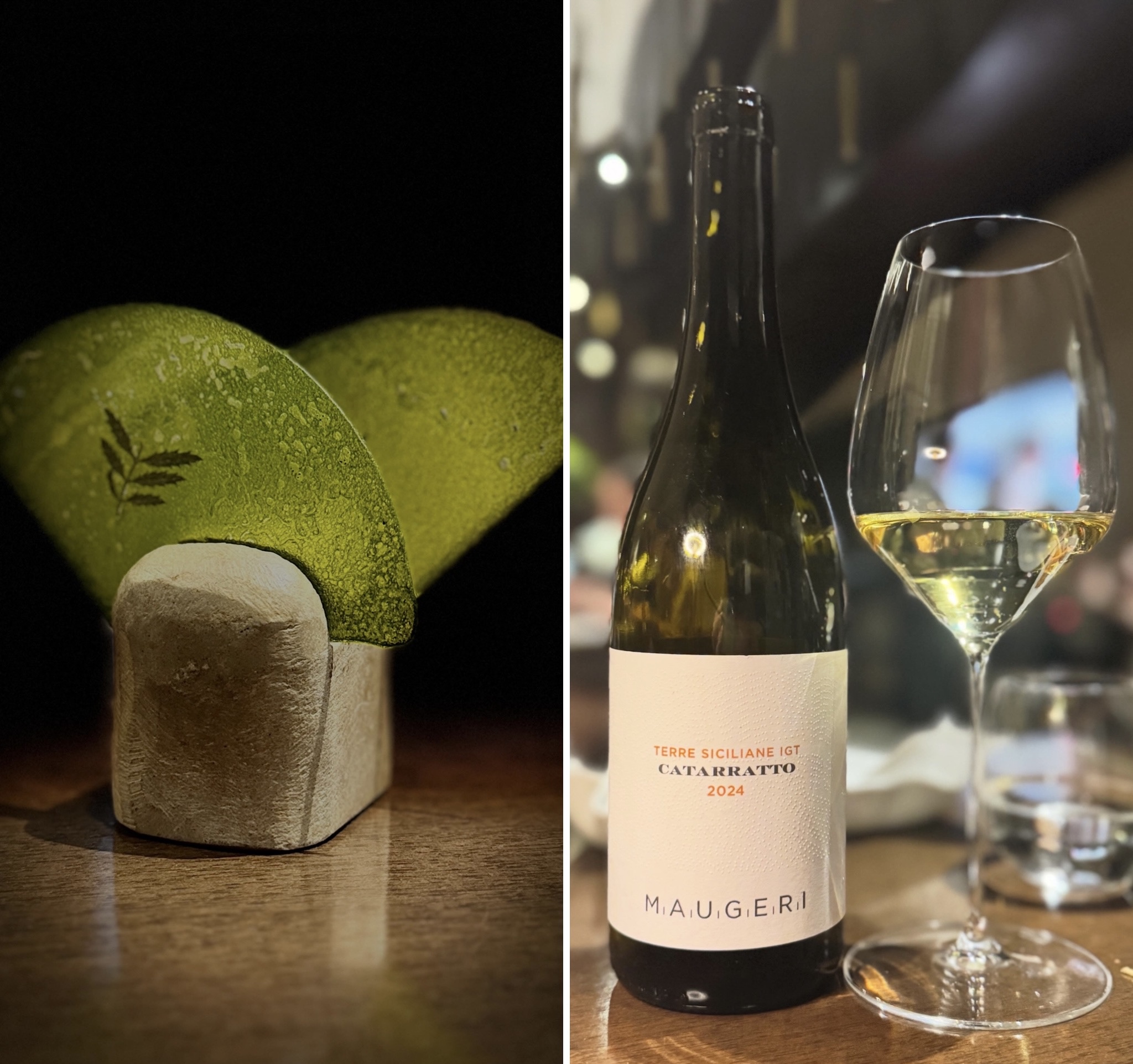
Accompanying the journey is the Catarratto Terre Siciliane IGT 2024 from Cantina Maugeri, an authentic expression of the island, capable of engaging with the cuisine through freshness, sapidity and a precise mineral imprint.
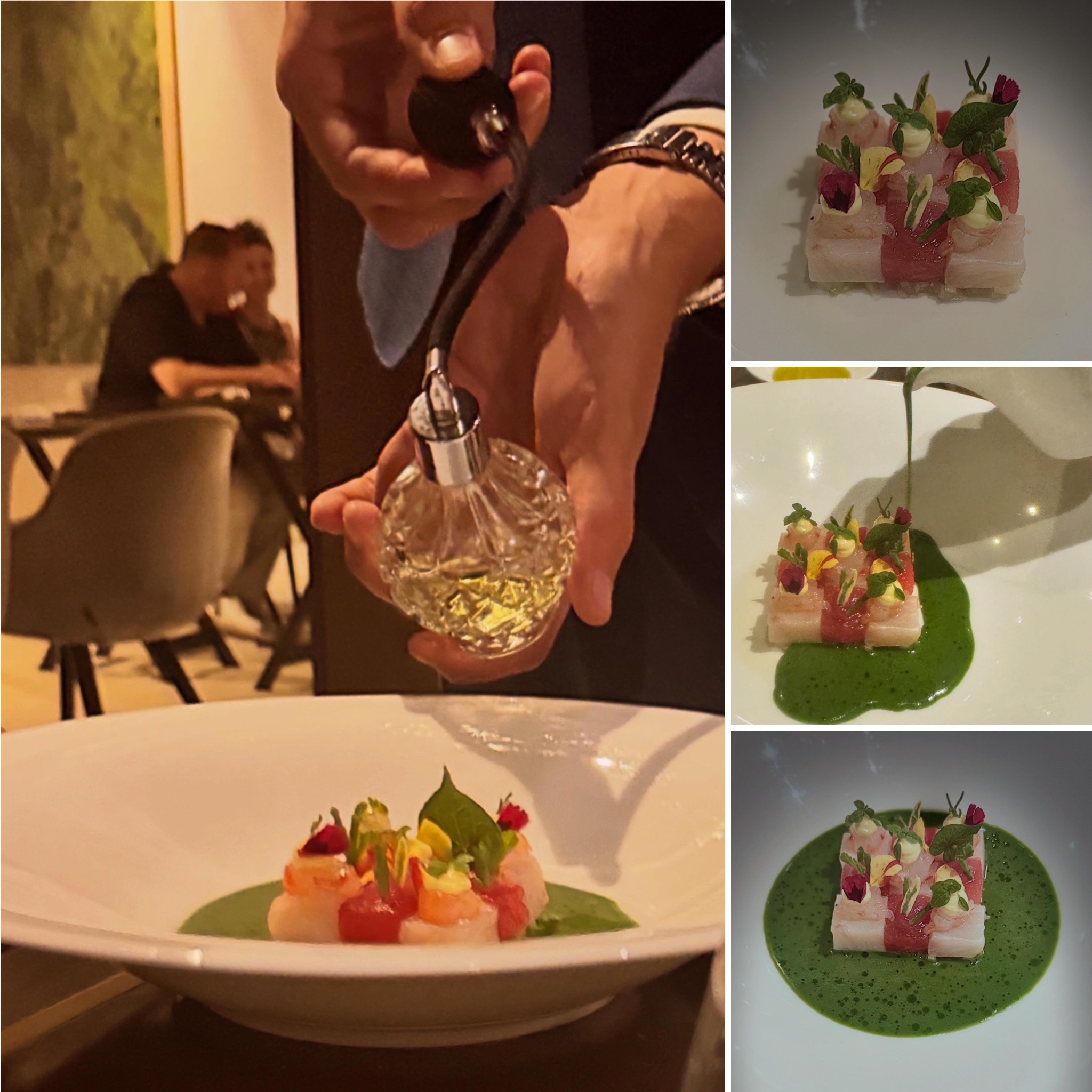
The first dish brings together amberjack, Ortigia red prawn and watermelon, arranged in a geometric composition that almost resembles a Rubik’s Cube. The fruit, treated by osmosis with its own juice, introduces freshness and sweetness, in perfect harmony with the marine component. Around it, vegetal and citrus notes complete the dish with restraint, preserving its lightness and balance.
“Peppe-roni” places the pepper centre stage. Roasted on the barbecue and left to marinate for twenty-four hours, it acquires depth and a subtle smoky imprint, while an intense sauce further concentrates its character, accompanied by notes of Mediterranean herbs. Alongside it, a small bread dedicated to the same ingredient makes the act of scarpetta almost inevitable, the final gesture of a dish built upon apparent simplicity and concentration of flavour.
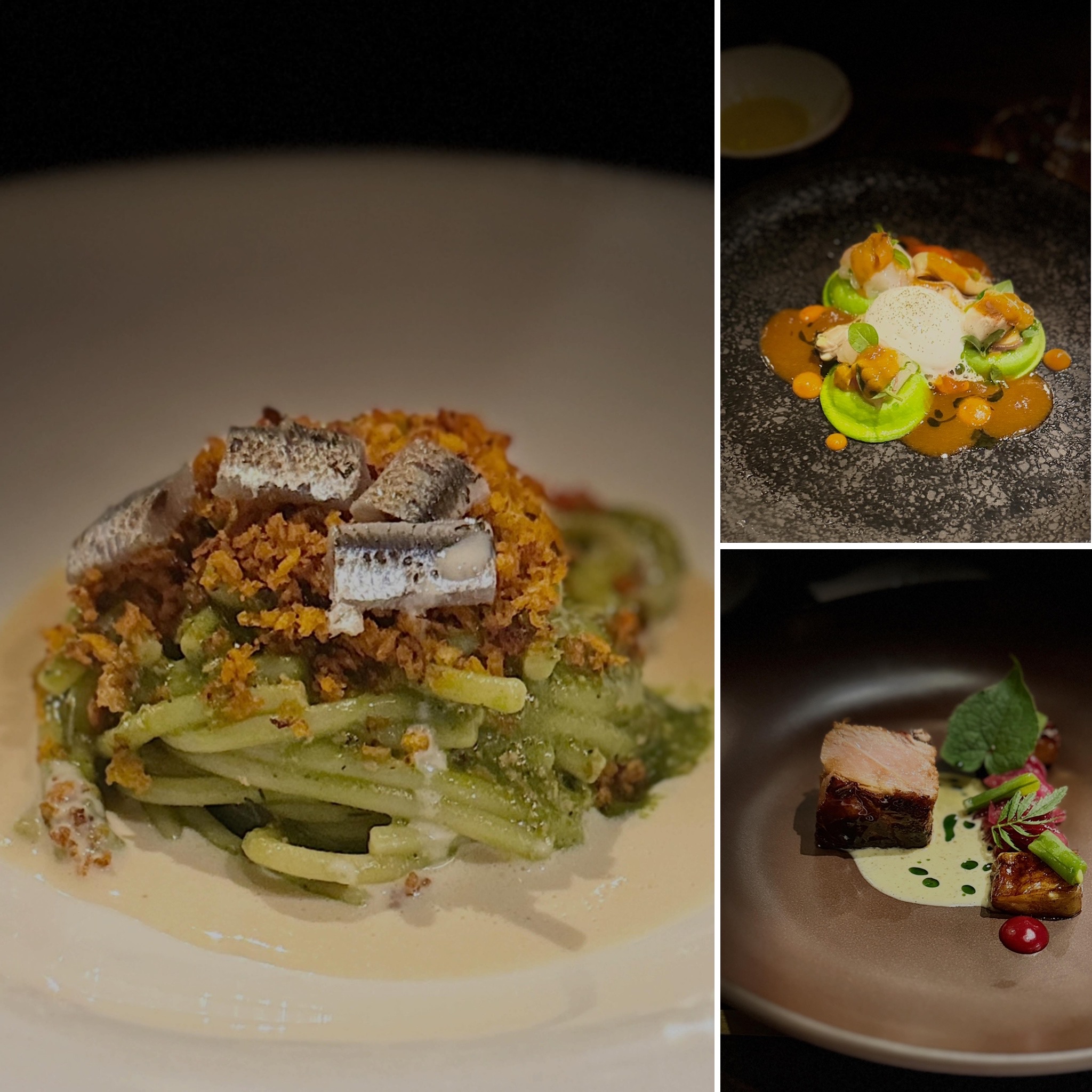
The connection with Syracuse becomes explicit in “Tributo a Santa Lucia”, a thick spaghetti dish that begins with the essential simplicity of garlic, oil and chilli before developing through marine accents and the fragrance of wild fennel. Further depth is provided by garum, a reference to one of the most ancient preparations of the Mediterranean, made in Roman times by fermenting fish in salt and here reinterpreted in a contemporary key. Toasted breadcrumbs complete the dish with a different interplay of textures, in an intense synthesis dedicated to the patron saint of Syracuse.
“Essenza marina” marks a change of perspective in the narrative of the Mediterranean. At its centre, a button of fresh pasta encloses a liquid heart of garlic, oil and chilli, designed to be released only during the tasting. Around it, molluscs and crustaceans convey different expressions of the sea, amplified by a cold foam of seawater. Rather than relying on a single ingredient, the dish seeks to condense an overall sensation, constructed around elemental and profoundly Mediterranean flavours.
“Un pesce fuor d’acqua” leads the journey towards greater intensity. The belly, marinated in olive oil and cooked on the barbecue, develops a smoky component upon which the depth of aubergine and fruity, acidic counterpoints are layered. Cooking over the embers is not merely a technique, but becomes part of the very identity of the dish, bold and layered.
A personal interpretation of the Caprese then introduces the transition towards the sweet part of the meal, gradually changing the rhythm of the dinner and preparing the way for the final courses.
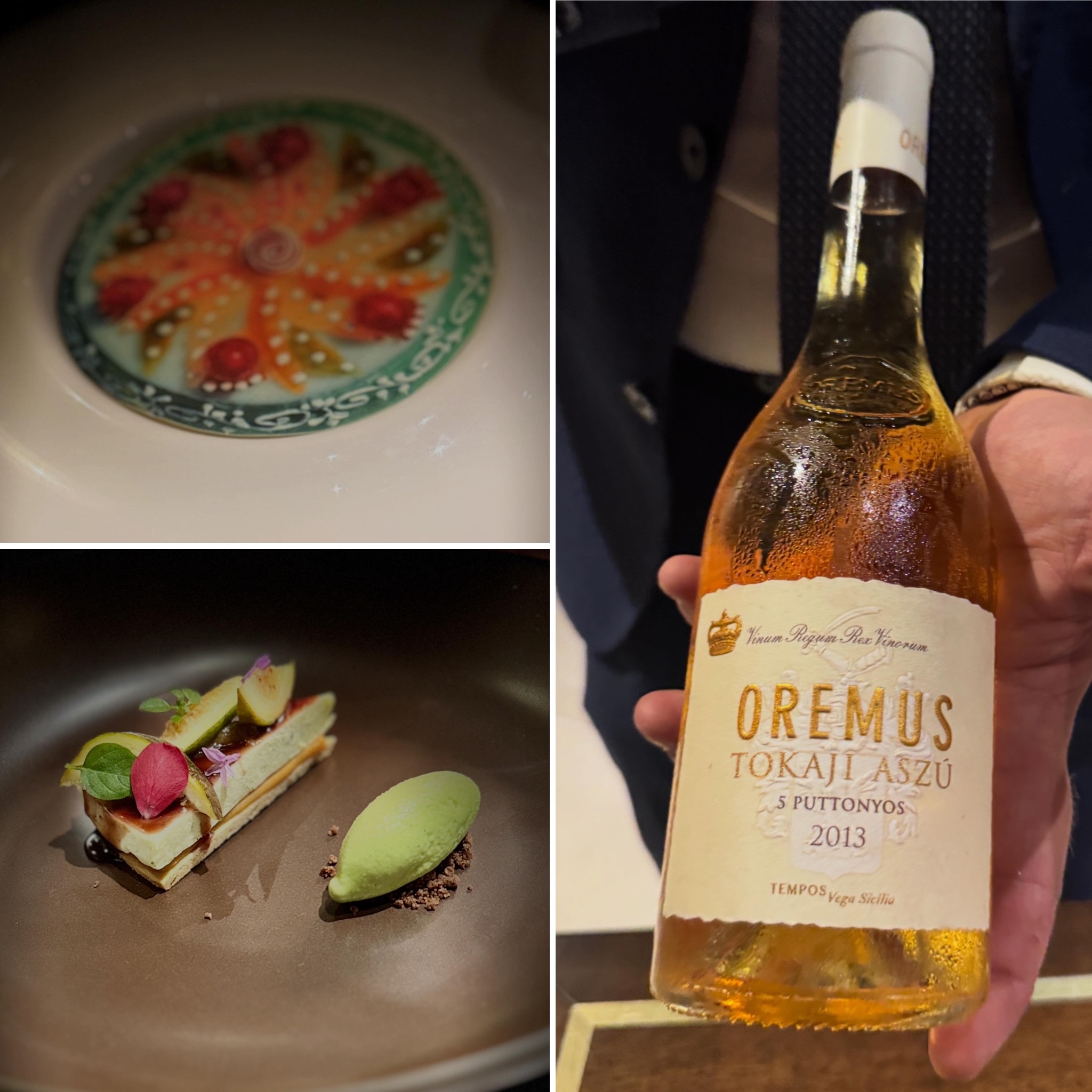
“Che Fico!! Dalla foglia al frutto” explores the fruit in its entirety. Presented through different textures, the fig engages with the aromatic notes of its leaves, also used for the ice cream, while dairy components and hints of amaretto accompany its natural sweetness. An intricate work that does not stop at its most immediate expression, but seeks to convey the identity of the plant as a whole.
Then comes “La cassata di Gigi”.
Ricotta, hay and candied fruit become the starting point for reinterpreting one of the symbols of Sicilian pastry. The play begins with the presentation itself: a large decorated cloche immediately evokes the imagery of the traditional cassata.
Ricotta and candied fruit preserve the connection with the memory of the dessert, while the hay introduces an unexpected aromatic component. The memory of cassata therefore remains perfectly recognisable, but becomes the foundation upon which something new is created.
With the desserts, the wine also changes and Sicily gives way to Hungary with Oremus Tokaji Aszú 5 Puttonyos 2013. Sweetness, concentration and vibrant acidity define its profile, accompanying the entire sequence of desserts and supporting their variety of flavours and textures without losing balance or depth.
The petit fours arrive enclosed within a reproduction of the dome of the Church of the Holy Spirit, the same dome that characterises this corner of Palazzo Salomone and from which the restaurant takes its name. Opened at the table, it reveals the final tastes of the dinner and ideally brings the journey to a close exactly where it began: at Palazzo Salomone, with Ortigia and the Mediterranean all around.