In Sicily, where light shapes the rhythms of the land and the wind carries with it scents of the sea, citrus fruits and Mediterranean scrub, the story of Donnafugata is born, a wine estate that has transformed its homeland into a language of emotions.
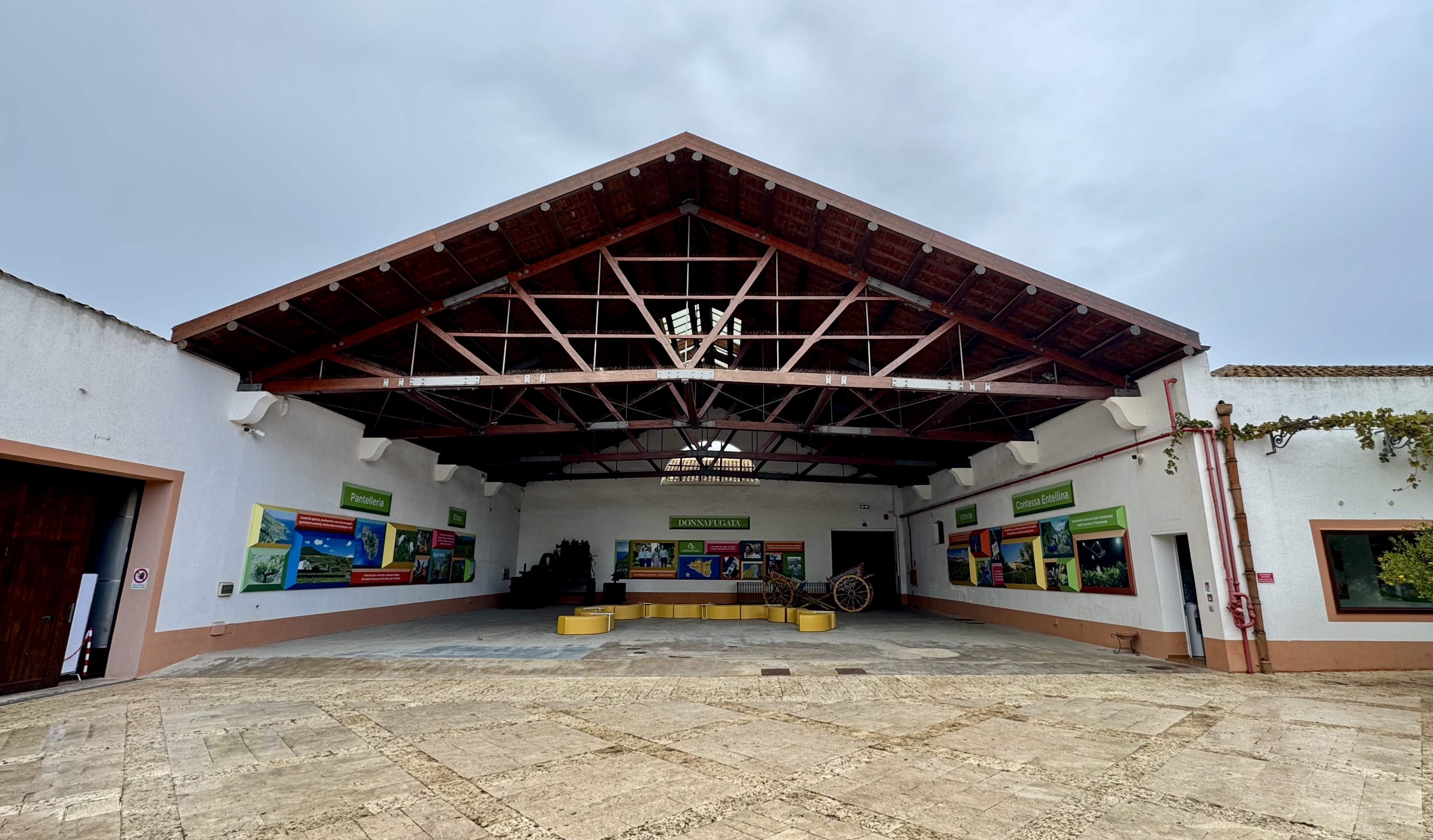
The historic headquarters is in Marsala, alongside the company’s other Sicilian estates in its production activities. It is in these places that the Rallo family chose to put down roots, building a project that brings together craftsmanship, creativity, and a deep respect for the land.
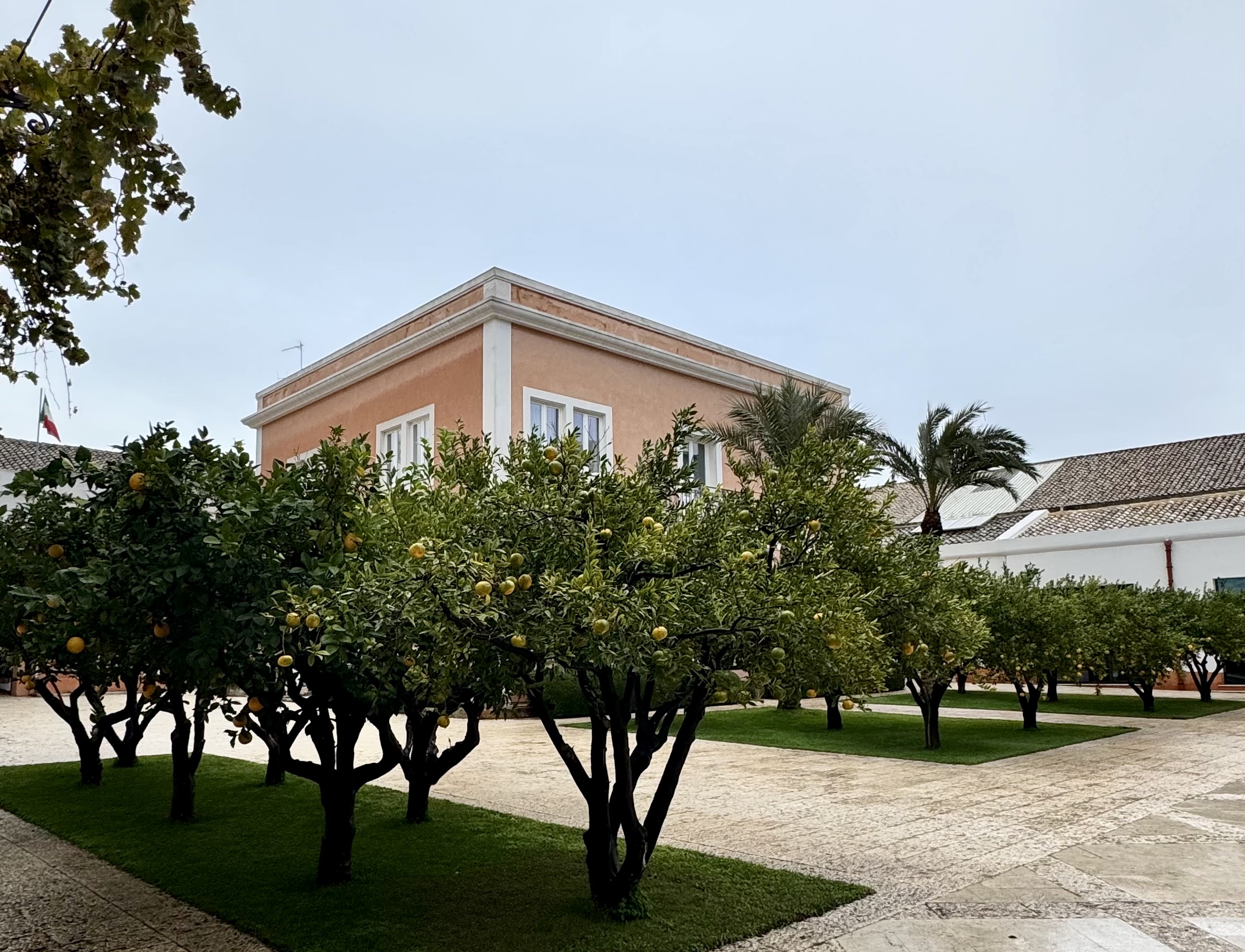
This city, beyond being the birthplace of the estate, evokes an ancient agricultural Sicily shaped by biodiversity and layers of cultural heritage. A striking example is the extraordinary collection of extremely rare citrus varieties, preserved within the complex of the historic 19th-century cellars, among courtyards and open spaces of the nineteenth-century baglio: a living landscape that tells centuries of history, cultivation, and care for the land.
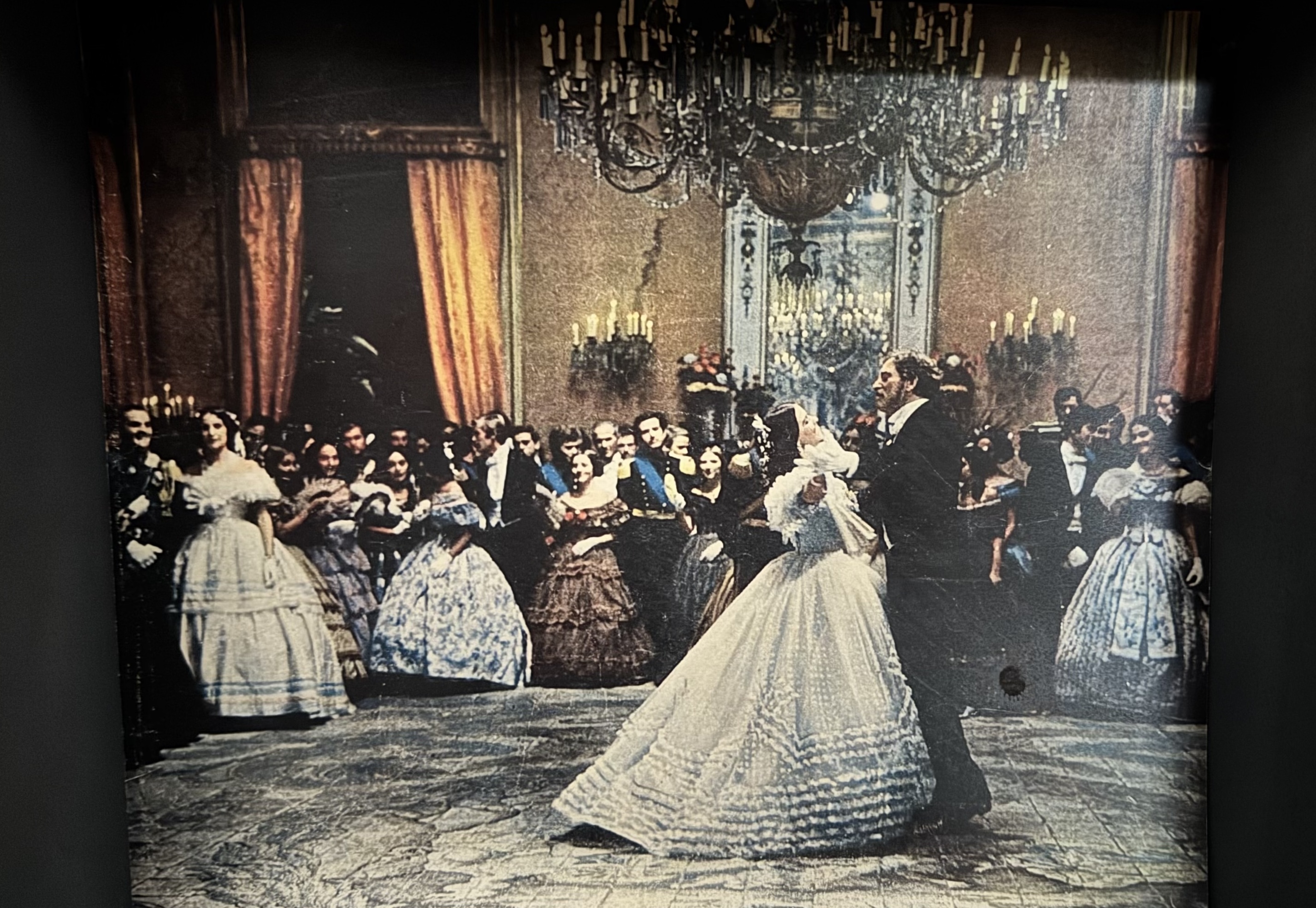
From here, the journey moves to Contessa Entellina, a place that preserves the ancient elegance of the Land of the Leopard. Its gentle hills, golden fields, and aristocratic silences evoke literary atmospheres: this is inland Sicily, deep and introspective, where time flows slowly and with solemn grace.
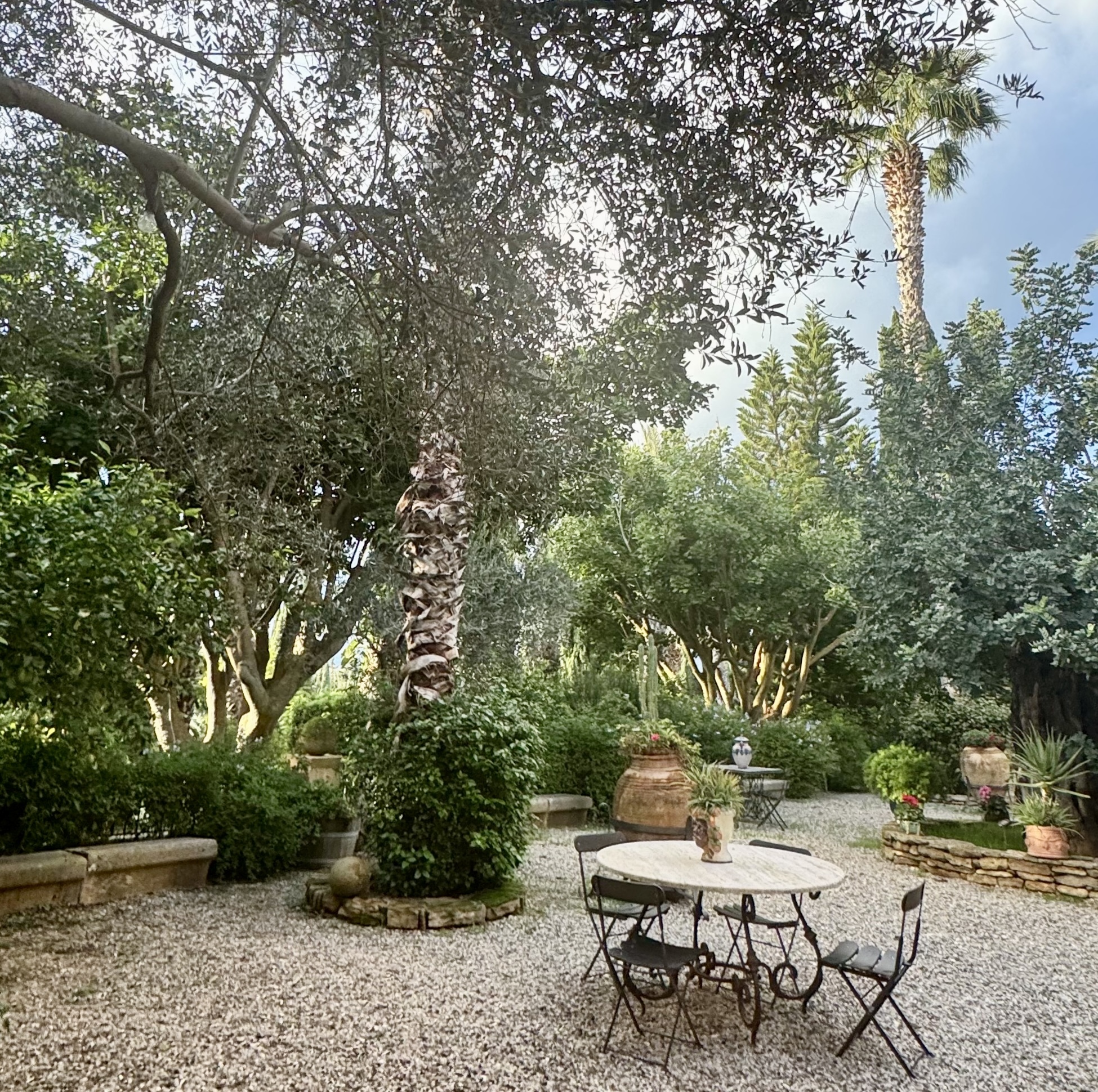
Here too lies the Giardino di Gabriella, a space that brings together Mediterranean plants, exotic species, and palms, becoming a place of light and gathering during events such as Calici di Stelle.
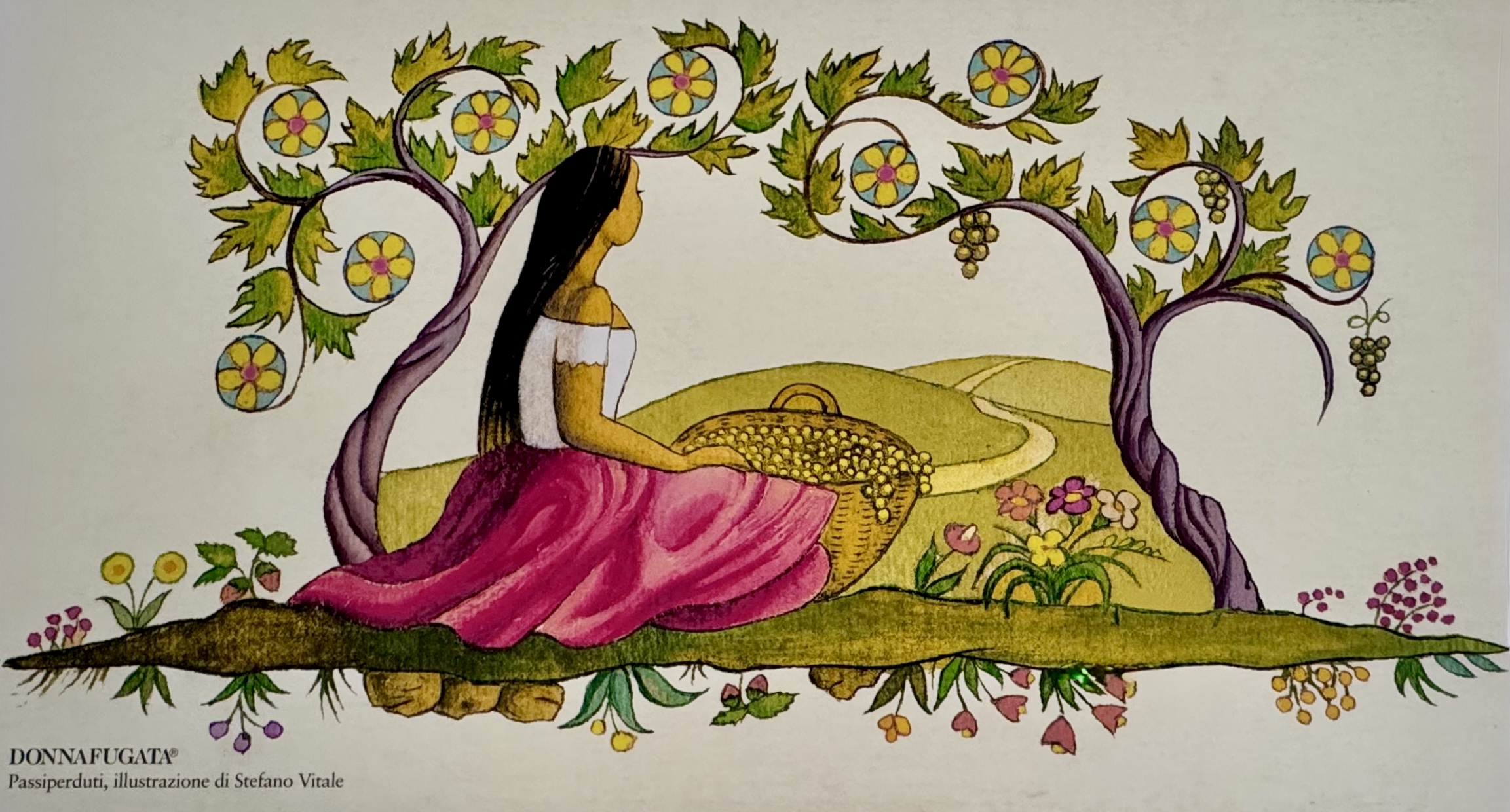
In this context, every Donnafugata wine is born as a story. The labels, illustrated with female figures, dreamlike landscapes, and evocative symbols, become gateways to a visionary universe. Each name is chosen with care, so that it encapsulates meaning, inspiration, and a fragment of history.
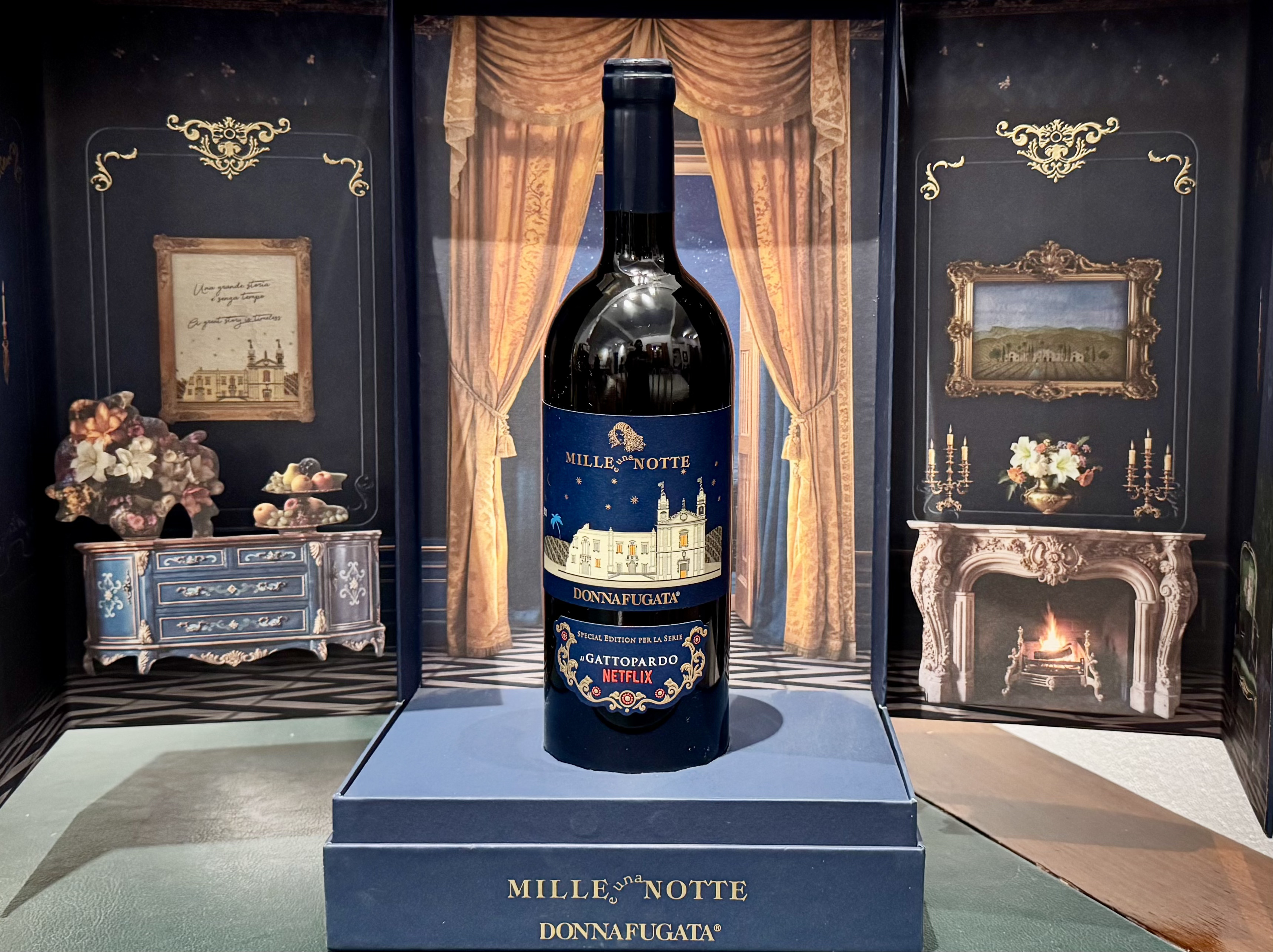
Mille e una Notte, born precisely in Contessa Entellina, carries with it the allure of Eastern tales and the epic breath of literature. Its name evokes a world of interwoven stories, mystery, and nocturnal light, while the label, with its stylised castle, invites the reader to step into a suspended dimension, where each sip becomes a chapter.
Tancredi, instead, pays tribute to one of the most iconic characters of The Leopard: the young aristocrat who embodies the dialogue between tradition and change. The wine mirrors this duality, poised between classical elegance and innovative drive, while the label, with its intense colours and proud profile, tells precisely this tension between past and future.
The Donnafugata narrative then extends to Mount Etna, where vineyards stretch beyond ancient lava flows, set within a complex natural environment and surrounded by a varietal woodland that bears witness to the coexistence of viticulture and volcanic landscape.
In south-eastern Sicily, in Vittoria, the estate is immersed in the verziere of Acate: a setting that speaks of aromatic herbs and offers a sensory reading of the territory, in direct dialogue with the agricultural landscape and local viticulture.
The journey finally reaches Pantelleria, home to Ben Ryé, the Passito di Pantelleria. Its name, derived from the Arabic “Son of the Wind”, poetically recalls the gusts that sweep across the island and caress the alberello pantesco vines. Here, viticulture is also expressed through the Cammino di Khamma, a path winding through vineyards, terraces and dry-stone walls, conveying the profound relationship between humankind and landscape. The label, radiant and dynamic, celebrates the power of nature and the sweetness of time.
From this narrative dimension, in which each wine speaks through its own identity and its labels, the focus then shifts to the technical side. Tasting thus becomes the moment in which the poetry of place meets the precision of the winemaking gesture.
Tasting
The technical journey proposed by Donnafugata outlined a voyage through sparkling wine bases and their different expressions, from the slopes of Mount Etna to the hills of Contessa Entellina. Not merely a tasting, but a structured comparison of base wines, harvest choices, acidity dynamics, and malolactic management, extending to the impact of time on the lees and post-disgorgement ageing. The common thread, clearly stated and perceptible glass after glass, is a single objective: to build tension without sacrificing substance or territorial recognisability.
Etna, northern slope: verticality as a signature
The first stop is Mount Etna, on the northern slope, between Monte La Guardia, the Pignatone area and Calderara Alta, below Randazzo, with the winery acting as both logistical and operational hub. Here, the 2025 Nerello Mascalese originates from a focused harvest carried out in mid-September, in a regular vintage marked by generous rainfall (around 800–850 mm), with the picking window closed early, ahead of the deterioration in weather conditions in October.
Sparkling Wine Base – Nerello Mascalese 2025
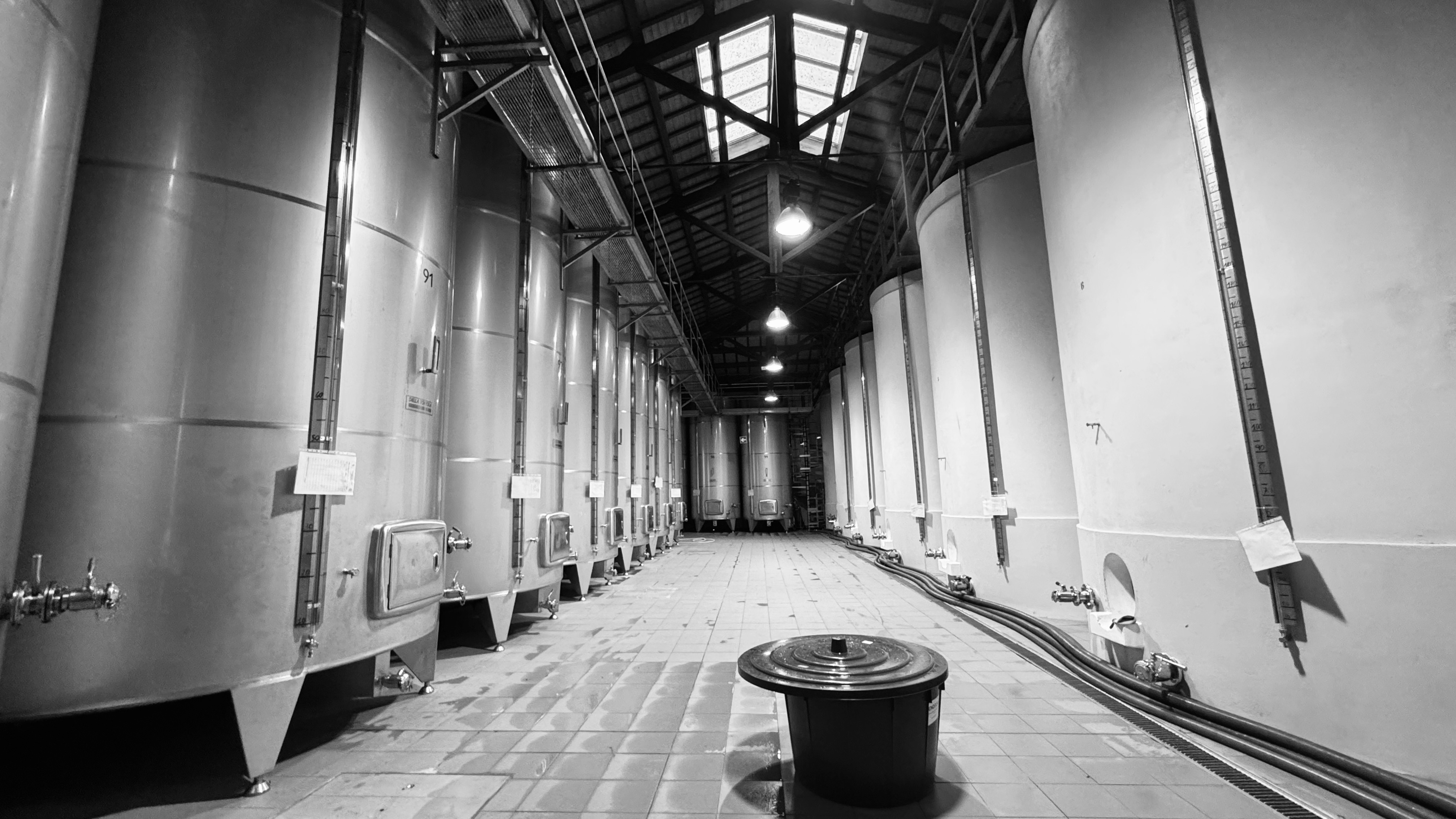
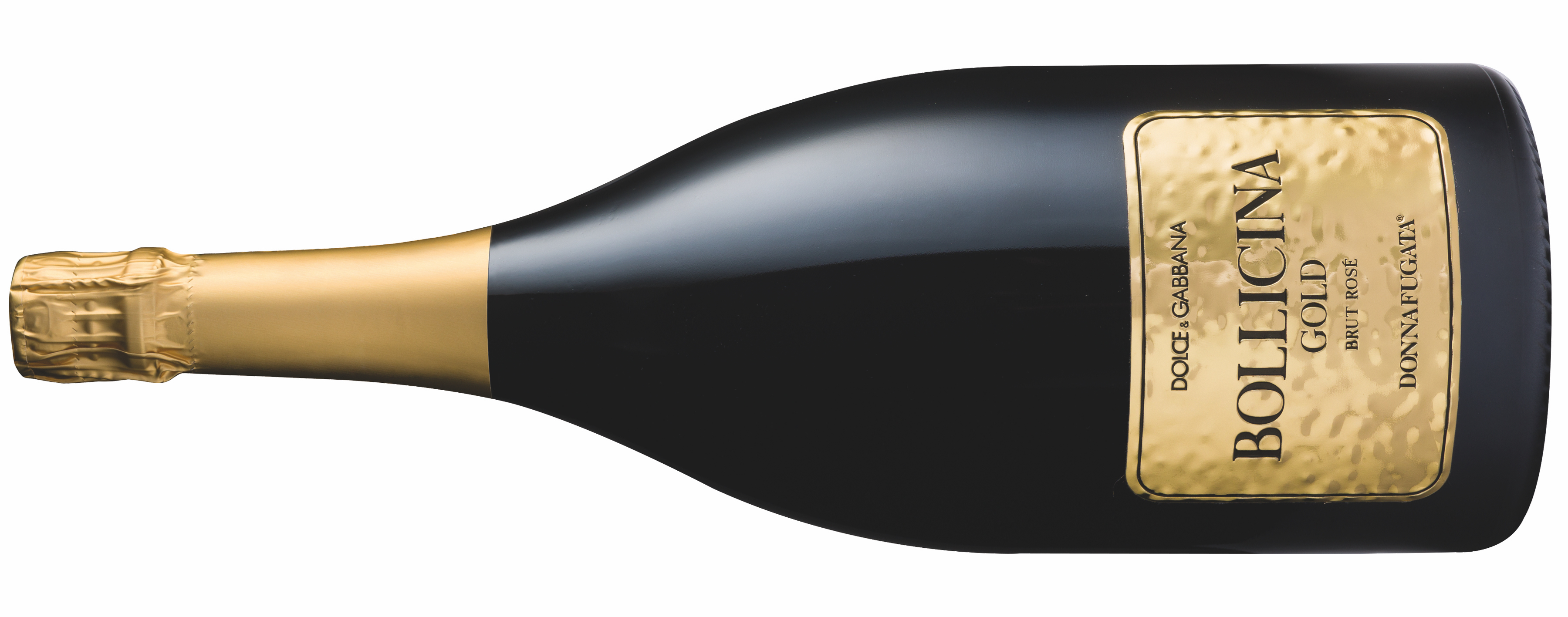
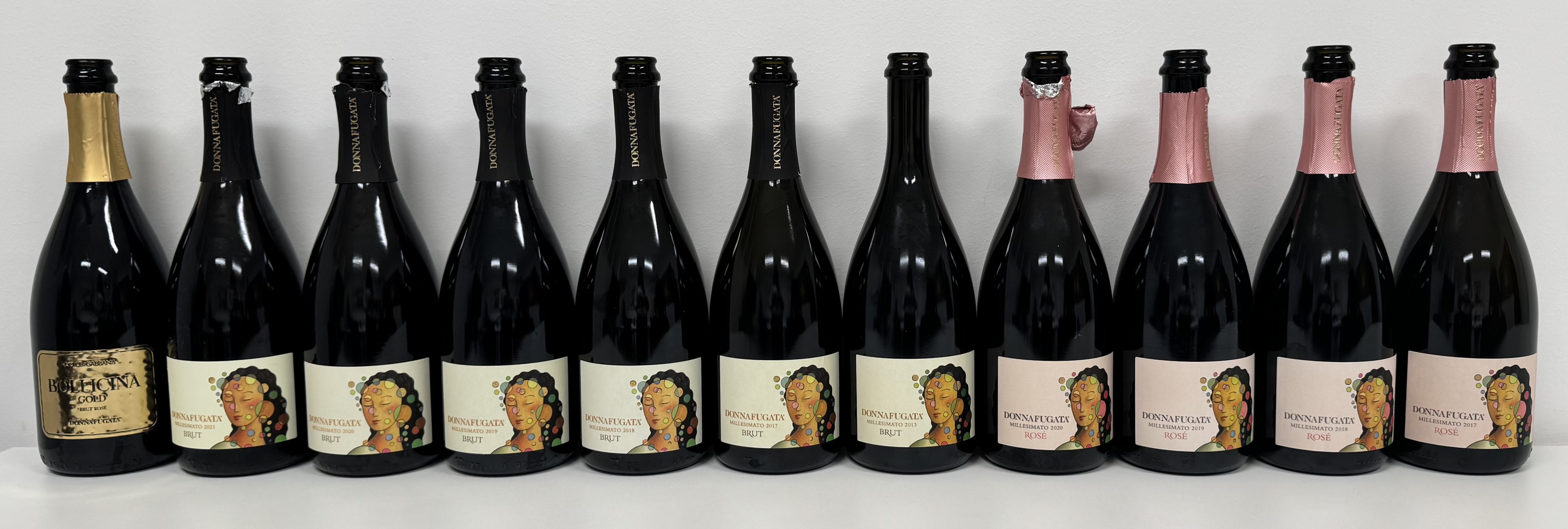
In the cellar, alcoholic fermentation takes place in stainless steel. What stands out is the wine’s ability to retain freshness even after undergoing malolactic fermentation in concrete: pronounced acidity, a clearly balsamic profile, and a marked citrus component. The base is striking for an imprint that recalls a “great red wine vinified as a white”: precision, drive, and a well-defined citrus trail. The profile remains fruit-driven, with delicate hints of peach blossom and an overall linear, focused expression. Bollicina Gold Dolce&Gabbana & Donnafugata Brut Rosé 2020 – preview
100% Nerello Mascalese Disgorged in summer 2024, with around one and a half years of post-disgorgement ageing.
On the nose, smoky notes emerge that are still settling. On the palate, the effervescence is dynamic, the finish lightly smoky with balsamic returns. Evolution leads towards sensations of gunpowder, revealing a potential that is still unfolding.
100% Nerello Mascalese Almost no maceration – Disgorged June 2023 – Dosage 6 g/l.
An elegant and composed profile. The fresh, balsamic imprint intertwines with a clearly defined floral component of broom, followed by hints of toasting and fine spice notes of saffron and ginger. On the palate, the texture is powerful and immediately vertical. The entry, marked by a precise bitter citrus note supported by lively acidity, evolves towards balsamic tones. Structure and density sustain the depth of a enveloping sip, while the progression becomes more mineral. Notes of bread crust and roasting emerge. The finish highlights a dry, slightly bitter echo, almost reminiscent of dried fruit, accompanied by a smoky nuance consistent with the volcanic origin of the variety.
Contessa Entellina: the hillside, the “classic” blend and precision in harvest timing
From Etna, the journey moves to western Sicily, to Contessa Entellina, where the landscape changes, and with it the rhythm of the narrative. The vineyards look towards the Salaparuta area, across a sequence of hills lying between 500 and 550 metres above sea level, characterised by medium-textured soils with a clay matrix and deeper compaction. Marked slopes and a limited yet significant elevation difference—around 50 metres—create micro-variations that become decisive at harvest time.
Harvest was set for 28 July and carried out over four days, following a precise sequence: Chardonnay first, then Pinot Noir. Timing was rigorous, dictated by high daytime temperatures mitigated by good nocturnal thermal variation, a key factor in preserving balance and freshness.
Vinification follows a clear, uncompromising grammar: manual harvesting in crates, gentle whole-bunch pressing with yields around 50%, “only the free-run juice”. Fermentation takes place in stainless steel, with malolactic fermentation carried out in tank. Part of the wine ages in 228-litre Burgundy barrels, while at tirage a proportion of reserve wines—between 5 and 10%—from one or two previous vintages is added, acting as a reservoir of complexity and a lever of finesse.
The 2025 base built at this stage is a blend designed for balance: two-thirds Chardonnay and one-third Pinot Noir, an assemblage aimed at combining immediacy and elegance, clarity and depth, allowing site and thermal amplitude to define the final profile.
Sparkling Wine Bases 2025
Blend: 2/3 Chardonnay, 1/3 Pinot Noir On the nose, pear and banana emerge, with a soft, immediate fruit profile accompanied by white flowers. On the palate, the entry is saline and delicate; as it progresses, an elegant bitterness of balsamic origin appears, followed by a subtle mentholated touch that carries the finish with precision.
Pinot Noir – rosé version Pressed with a couple of hours of maceration. Malolactic fermentation completed, with more tartaric acidity. On the nose, fresh wild strawberries; the finish leaves a clear and defined raspberry aftertaste.
The stated philosophy is clear: not to fixate on percentages as an obsession, but on provenance and coherence of the final design. It is a concrete position, shaped by daily experience with volumes, vintages, and mass management: blending is not mathematics, it is a dynamic balance.
This is where the thinking of Manlio Giustiniani, Champagne Expert, comes into play, interpreting blending as a gesture of sensitivity rather than calculation, a constant listening to the wines and their nuances, to recognise each year the trajectory most faithful to the house style.
Time as a third variable: lees, dosage and the “reading” of vintages
The tasting expands to include vintages already on the market and the differences between them, interpreted as a technical chronicle of the project’s evolution. For the Chardonnay–Pinot Noir blend, lees ageing is around 36 months, followed by release after a further 6–8 months of post-disgorgement ageing. Residual sugar consistently sits between 6 and 7 g/l: a dry brut, on the edge of extra-brut, with the awareness that legal definitions do not always coincide with sensory perception.
On the nose, the 2021 moves along cedary tones, with citrus freshness and hints of dried fruit; the profile remains taut and essential, more oriented towards energy than roundness. The 2019, by contrast, introduces another perspective: slightly higher pH, a broader, more open perception, and the crucial question of how this openness will hold over time. It is a question the tasting does not shy away from: a wine that appears relaxed today—will it stand firm tomorrow?
The turning point in the collective narrative of the table is 2018: the “arrived” vintage, complete, capable of holding depth and balance together and showing how decisive time has been in building complexity. From this arises a strategic choice: to extend ageing times, give more breathing space, and make waiting an integral part of the project.
Then come the vintages that raise the bar of memory: 2017 and 2013. The 2017 is linked to a very hot context and an exceptionally early harvest (early August), while 2013 stands out as a “cold” vintage with remarkable ageing capacity. On the nose, the 2013 is described as a wine of almost inexhaustible depth, with a finesse that does not fade and a slight evolution played on dried fruit, marzipan, and dried herbs; on the palate, its strength lies in continuity, in the ability to remain intact over time without losing precision.
Brut Vertical Tasting
Donnafugata, Millesimato 2021 Disgorged April 2025 – 36 months on the lees. Aromatic on the nose; as it evolves, notes of cedar emerge. The profile remains fresh and citrus-driven, with hints of dried fruit beginning to surface discreetly.
Donnafugata, Millesimato 2020 Disgorged August 2024. Smoky notes emerge on the nose. On the palate it appears fresher, with caramelised hints and a clear saline imprint supporting the progression.
Donnafugata, Millesimato 2019 Disgorged March 2023. Incense, pinewood and fruit mustard on the nose. The sip is long and persistent, with citrus freshness sustaining the finish.
Donnafugata, Millesimato 2018 Disgorged May 2022 – very cold vintage. An initial smoky note is followed by a fresh, citrus-driven burst. Hints of custard cream enrich the aromatic picture. On the palate, salinity and toasting develop progressively, with well-articulated complexity.
Donnafugata, Millesimato 2017 Disgorged April 2021 – very hot vintage, harvest on 2 August. Wild mint is evident on the nose and returns coherently on the palate. Freshness remains present, despite a sunny, concentrated vintage.
Donnafugata, Millesimato 2013 Disgorged December 2017. Elegant on the nose, aromatic and distinctive. Minimal evolution over time, with notes of dried fruit, marzipan, and a composure that reflects one of the coldest vintages of the period.
Rosé Vertical Tasting
Donnafugata, Millesimato 2020 Disgorged April 2024. Dry and taut, essential in structure. Clean, slightly bitter finish.
Donnafugata, Millesimato 2019 Disgorged May 2023. Fuller and more structured. Mineral notes on entry, followed by a hint of smokiness. Raspberry contributes to defining the fruit profile.
Donnafugata, Millesimato 2018 Disgorged May 2022. Fruit-driven profile, accompanied by a mentholated component that adds drive and freshness.
Donnafugata, Millesimato 2017 Disgorged April 2021. Wild mint on the nose, with a finish leaning towards roasted notes. A warm vintage, with a floral profile still clearly legible.
In the end, what remains is not merely a sequence of vintages and parameters, but a vision: Etna brings verticality and the unmistakable signature of Nerello Mascalese; Contessa Entellina contributes precision in blending and the consistency of a hillside capable of mitigating vintage effects; while time—on the lees and after disgorgement—emerges as the third decisive variable, the one that transforms a technically well-crafted wine into a wine able to tell the story of a place, an idea, and a stylistic direction.
“Here the first part comes to an end; the story will continue in the next article.”
Tiziana Mirabella
🔗 Discover more about Donnafugata and its wines: 🌐 www.donnafugata.it