Fischetti, Etna Elegance and Vineyard Biodiversity
13
Oct 2026
Condividi su:
The Fischetti estate is a small, family-run reality on the northern slope of Mount Etna, where an ancient, restored palmento is now an integral part of the winery. It is a place immersed among historic vineyards and lava soils, where Etna’s tradition is reinterpreted through direct, attentive work that is deeply connected to the territory. Reading Etna through the vineyard means interpreting the volcano in the wines that are born from it.
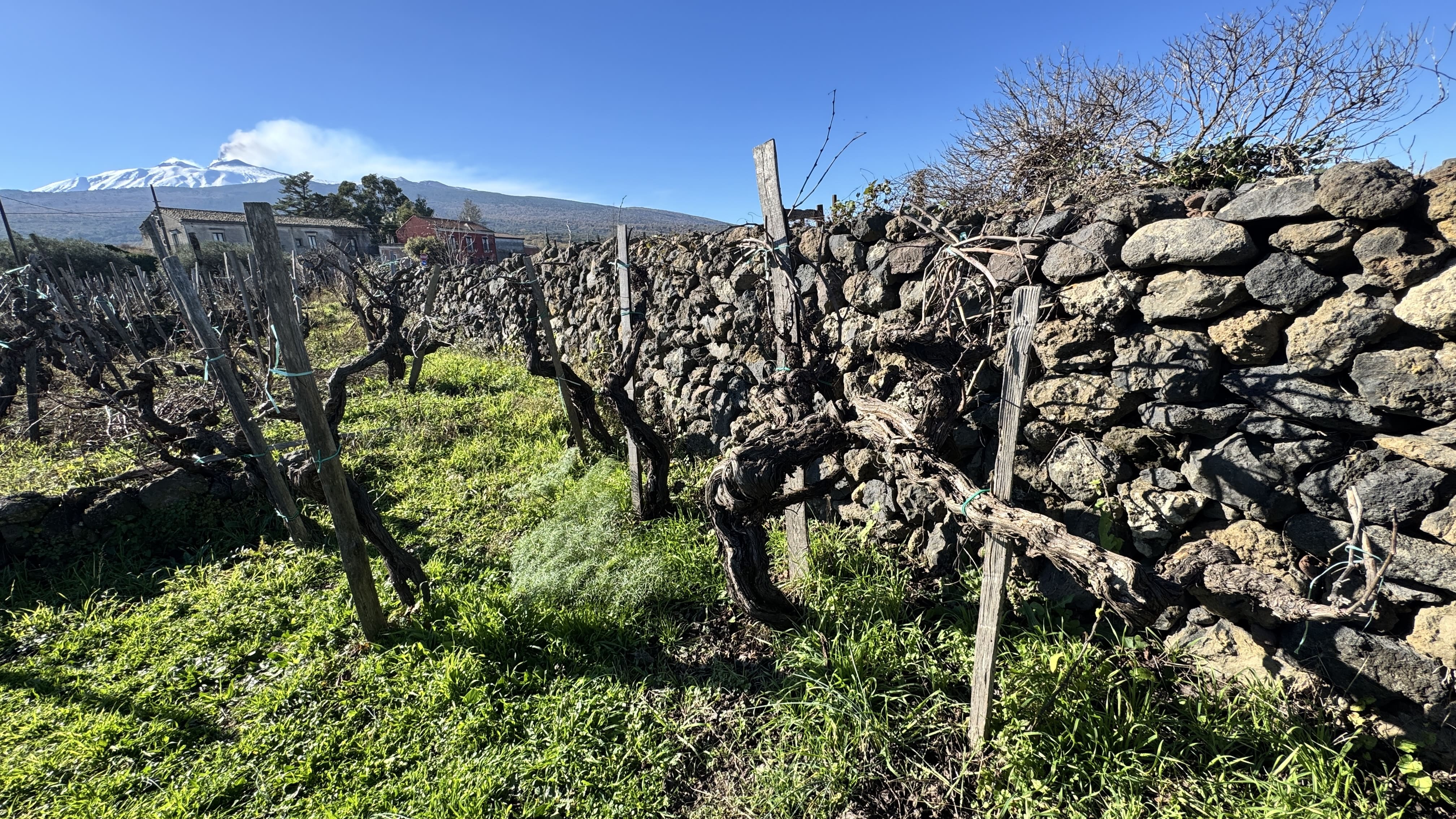
Walking through the vineyards while the volcano is active is like crossing a landscape in constant transformation. The parcels follow an ancient layout, stratified over time, where autochthonous varieties are joined by Coda di Volpe, Minnella Rossa and Grenache, presences that tell the story of an earlier peasant viticulture, shaped by adaptation and varietal coexistence.
Soils, Vines, Stratification and Production Choices
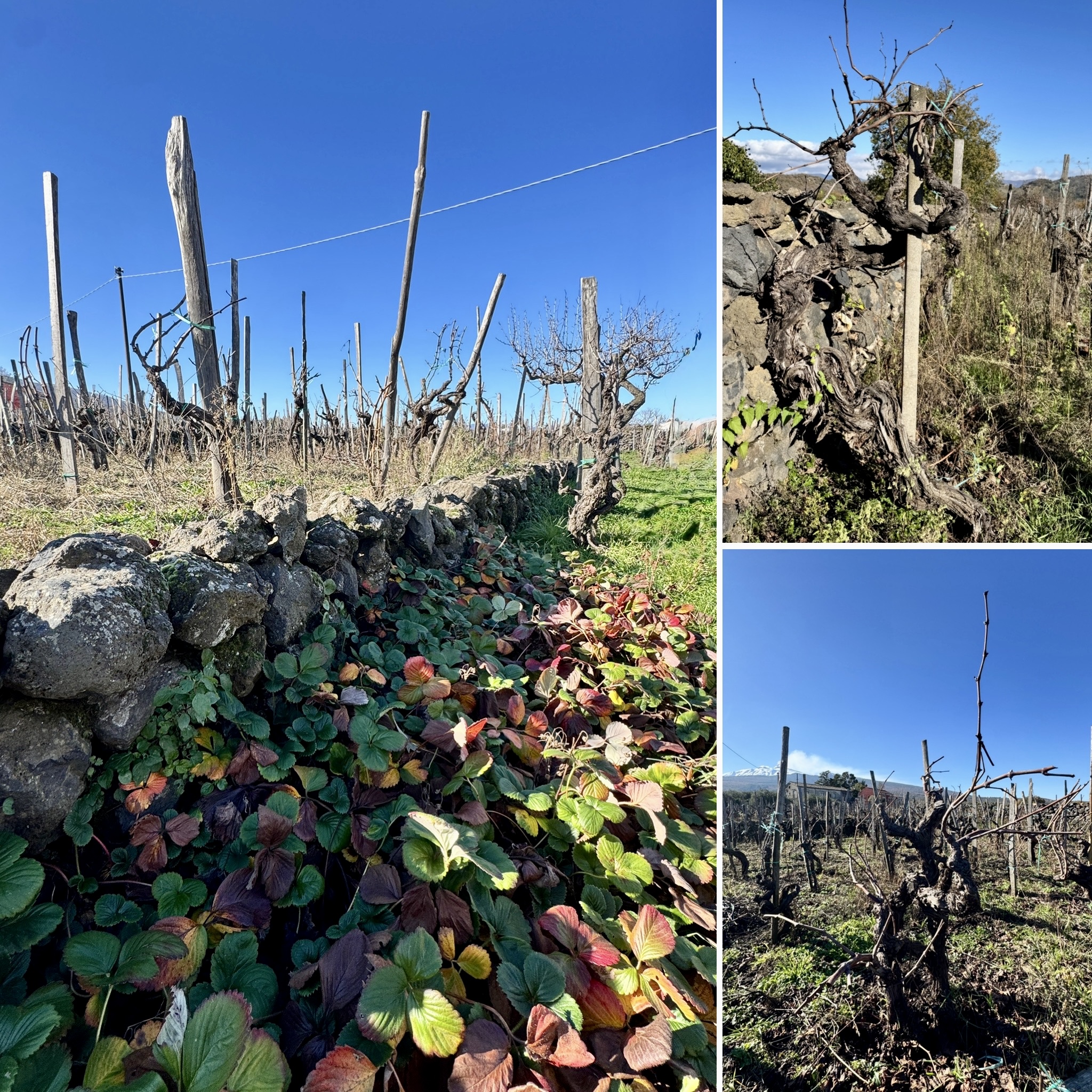
The vineyards extend over soils of differentiated volcanic origin: part of them sink their roots into lava materials linked to Etna’s eruptions of the fifteenth century, now profoundly transformed and more sandy; another part rests on deposits of nineteenth-century origin, more recent in geological terms, characterized by basaltic fragments and consolidated ash. Many vines, close to a century old, drive their roots deep, crossing different soil layers formed over time by successive lava flows and deposits, an element that contributes to the precision and expressive coherence of the wines.
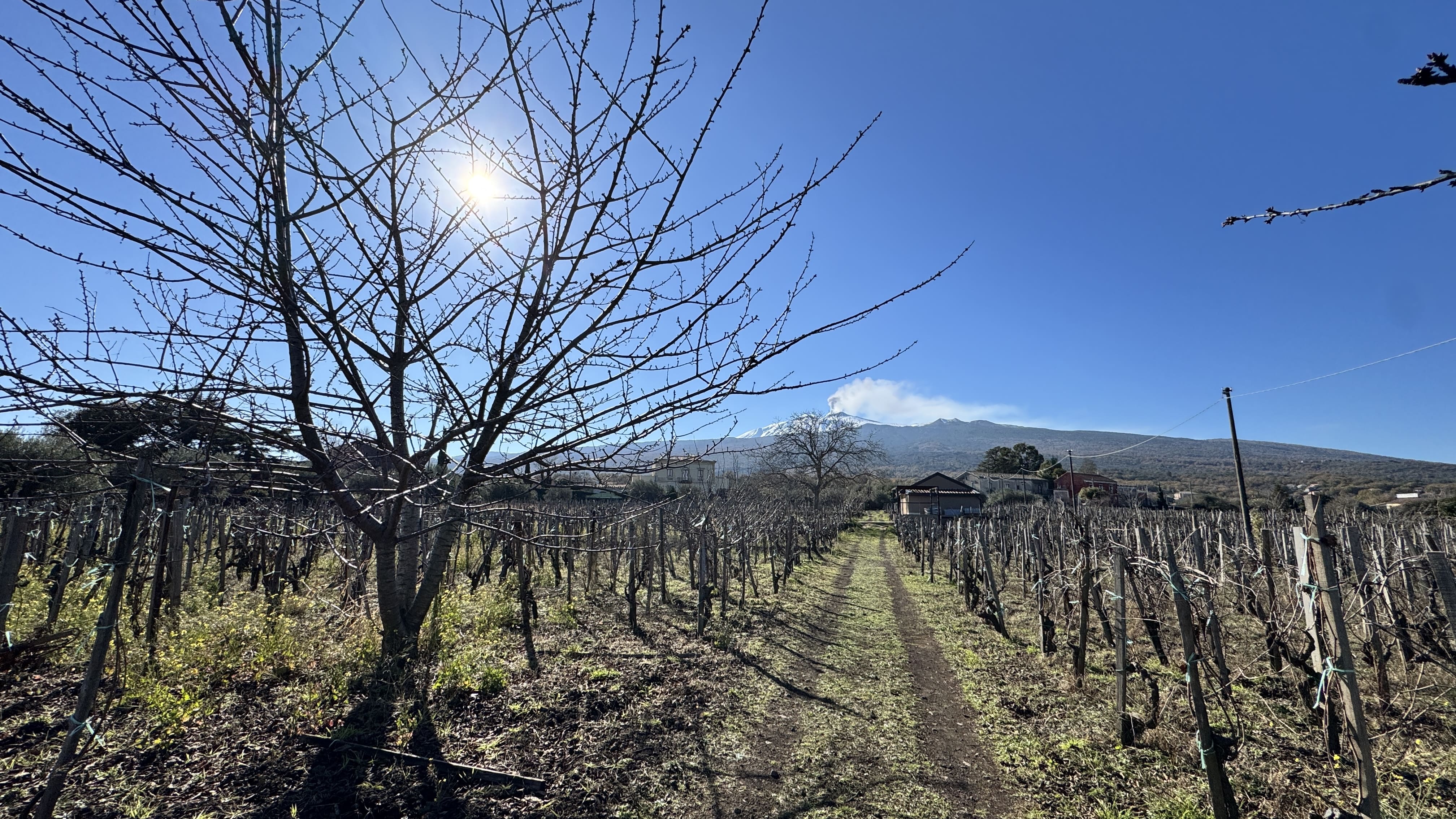
Among the rows, a few cherry trees also appear, their unharvested fruit naturally returning to the soil and reintegrating into the vineyard cycle. Their discreet presence accompanies the evolution of the lava soil and introduces a note of memory and simplicity, a detail that belongs more to time and place than to technique, and which surfaces in the wines as a subtle, natural echo.
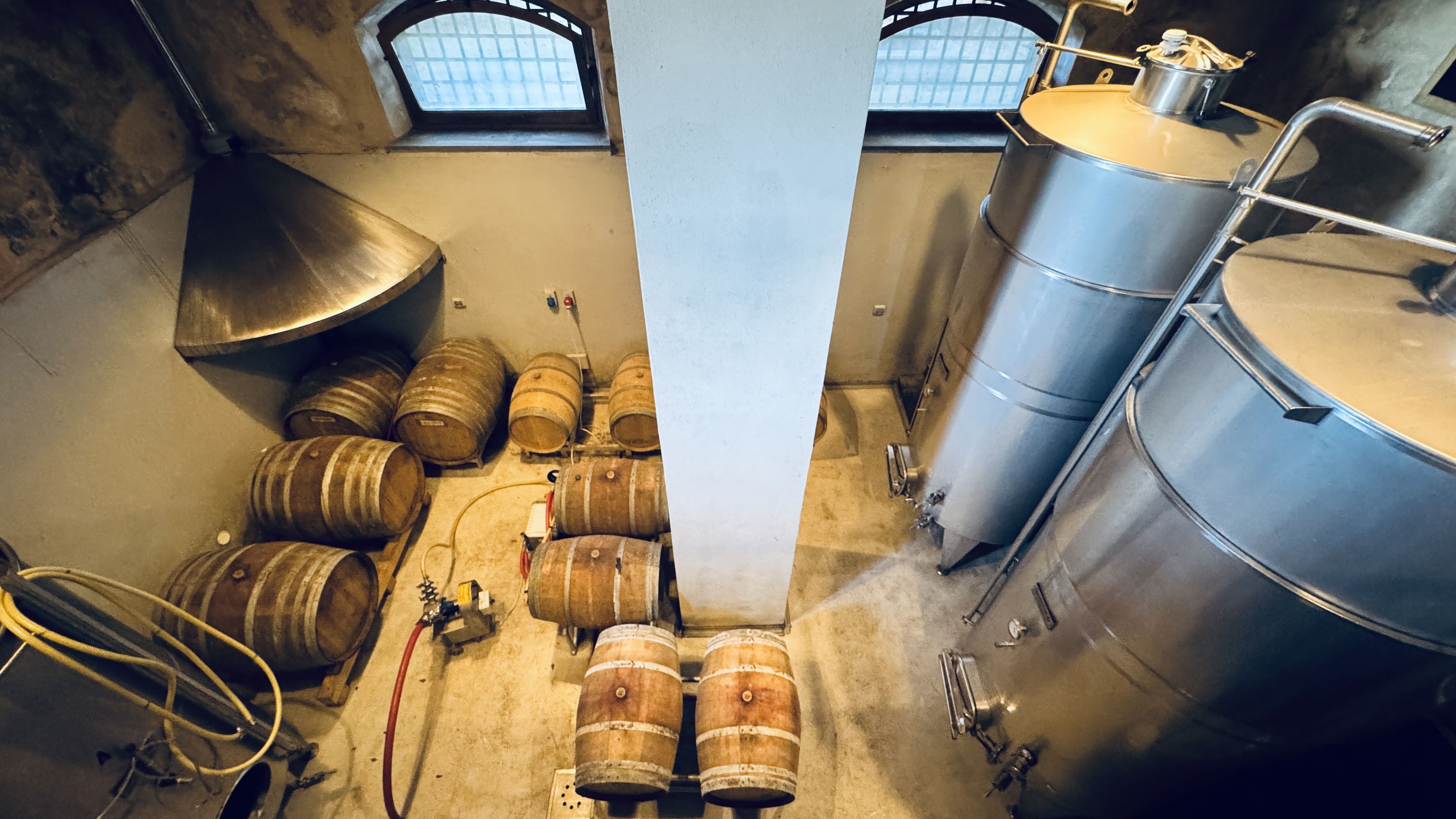
Production choices arise from observation of the vintage and from the characteristics the grapes show in the vineyard. For the reds, Nerello Mascalese is the reference variety, with Nerello Cappuccio completing the profile; the Riserva is almost always entrusted to the sole expression of Mascalese. For the whites, Carricante plays a central role: vinified as a pure varietal in the vineyards of Milo, or included in the traditional blend with Catarratto in the historic parcels. In the cellar, interventions remain measured, with attention to cleanliness and balance.
Tasting
The narrative continues in the glass, after the walk through the vineyards and the time spent at the estate, when tasting becomes a direct reading of the bond between soil, variety and style.
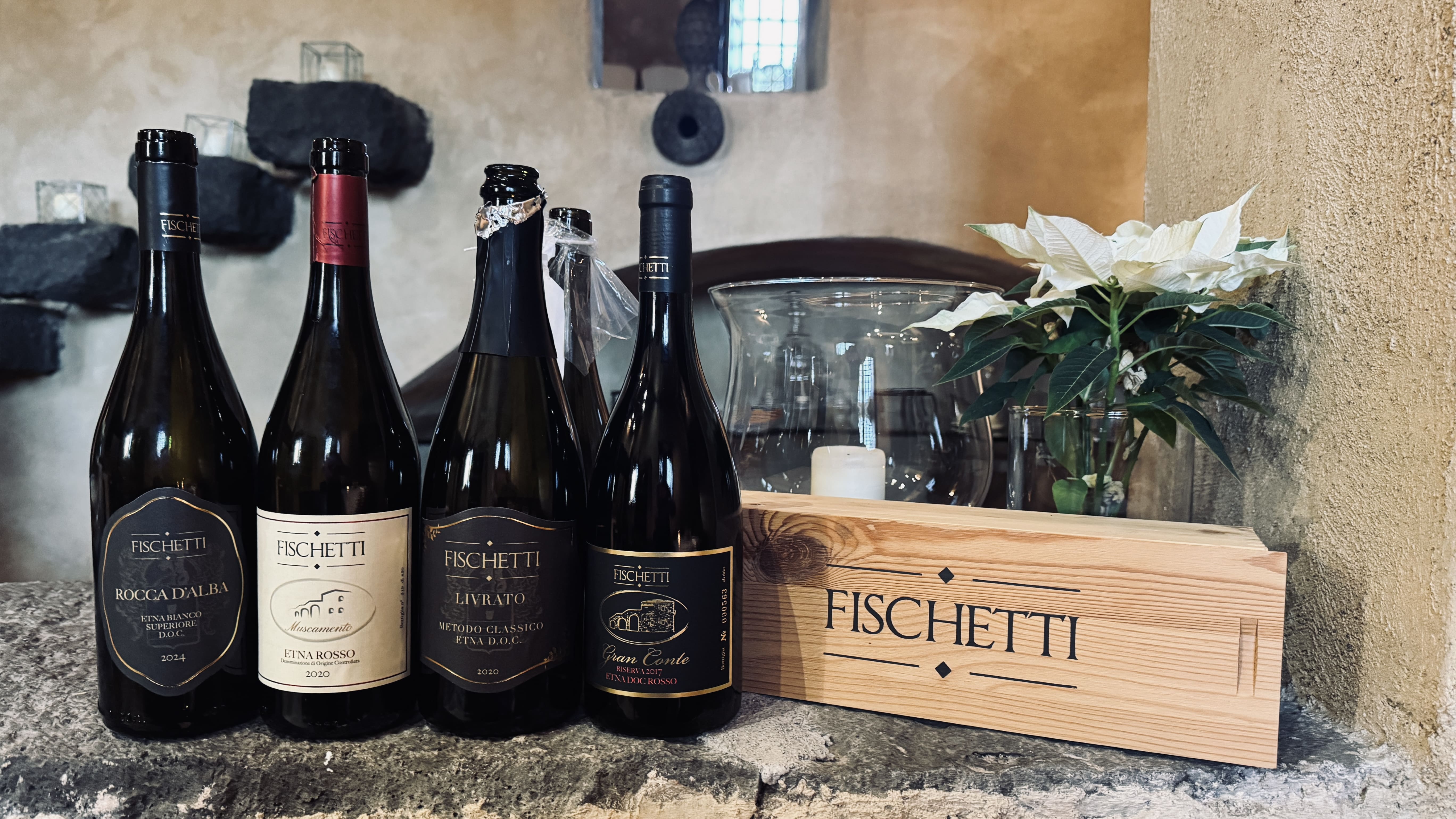
The tasting opens with Rocca d’Alba – Etna Bianco Superiore DOC 2024, Carricante, a wine that at the olfactory level plays on a balance between brightness and roundness. Citrus notes and white flowers emerge naturally, accompanied by a softer, almost buttery sensation that does not weigh the wine down, but instead dialogues with a well-defined freshness. On the palate, the sip is taut and linear, crossed by a marked sapidity that sets the rhythm and leads to a clean, saline, precise finish, leaving a sensation of clarity and continuity.
Next comes Muscamento – Etna Rosso DOC 2020, 80% Carricante, 20% Nerello Cappuccio, which expresses itself with a more restrained and introspective profile. At the olfactory level, small red fruits and hints of dried herbs emerge, in a sober register. On the palate, the wine is supported by well-integrated acidity and a fine texture, leading toward a dry, balanced finish.
With Livrato – Metodo Classico Etna DOC 2020, Nerello Mascalese, the narrative changes pace. At the olfactory level, citrus notes of orange and zest introduce an immediate, direct sensation of freshness. On the palate, the wine is vertical and sapid, with a dry, clean finish; it is still young, but already well defined, and after swallowing it leaves a warmer sensation that hints at its future evolution.
The tasting concludes with Gran Conte – Etna Rosso Riserva DOC 2017, Nerello Mascalese, deep and contemplative. At the olfactory level, sour cherry stands out clearly, followed by notes of leather and tertiary nuances that speak of time, without overshadowing the fruit. On the palate, the sip is juicy and structured, the tannin firm yet well integrated, with tension always present. The finish is long, deep and well defined, closing the journey with a sense of completeness.
A Reading of the Northern Slope
Overall, the wines offer a coherent interpretation of Etna’s northern slope, where soil stratification, vine age and the course of the vintages find expression in a precise, measured and recognizable style.