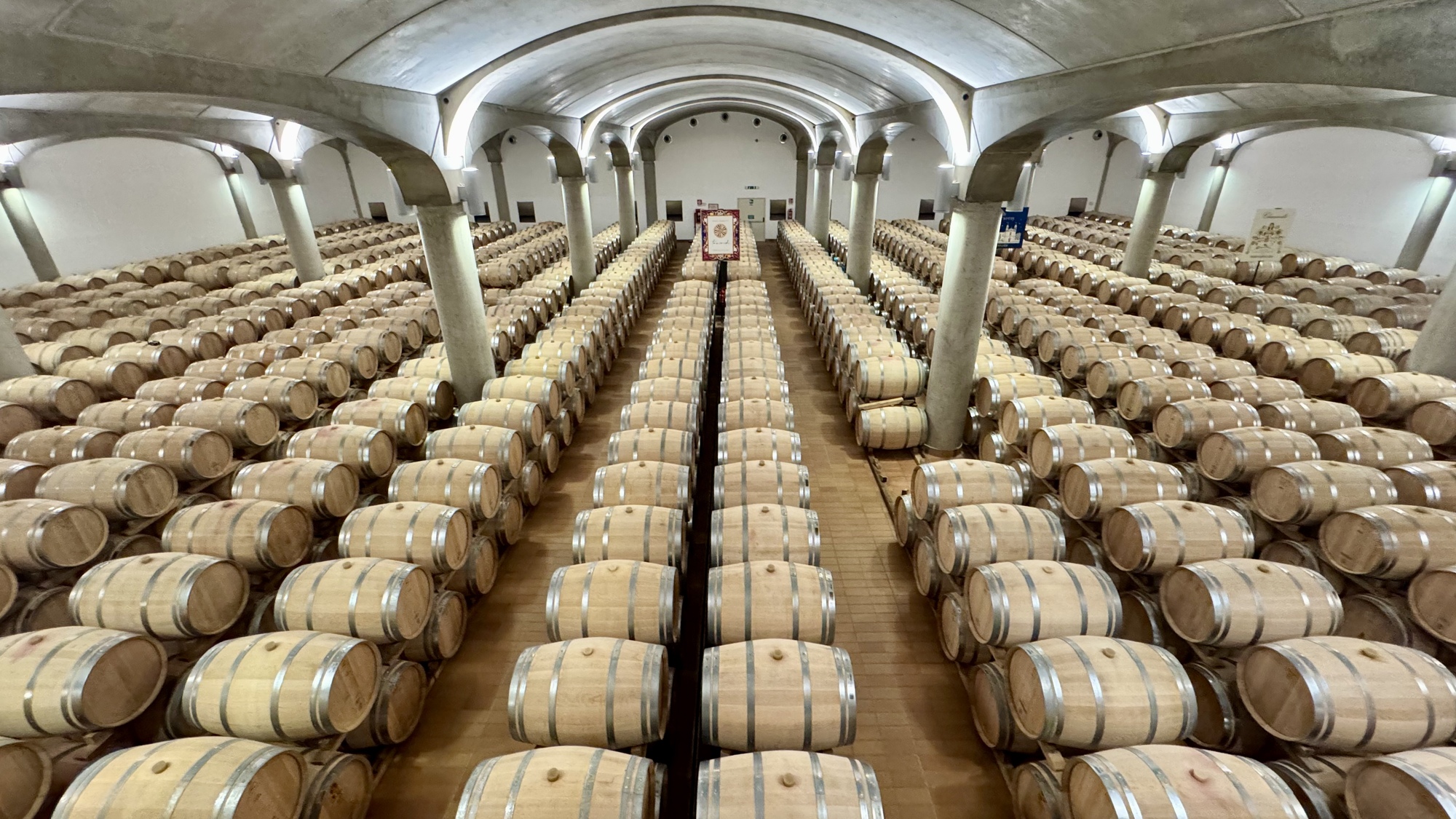
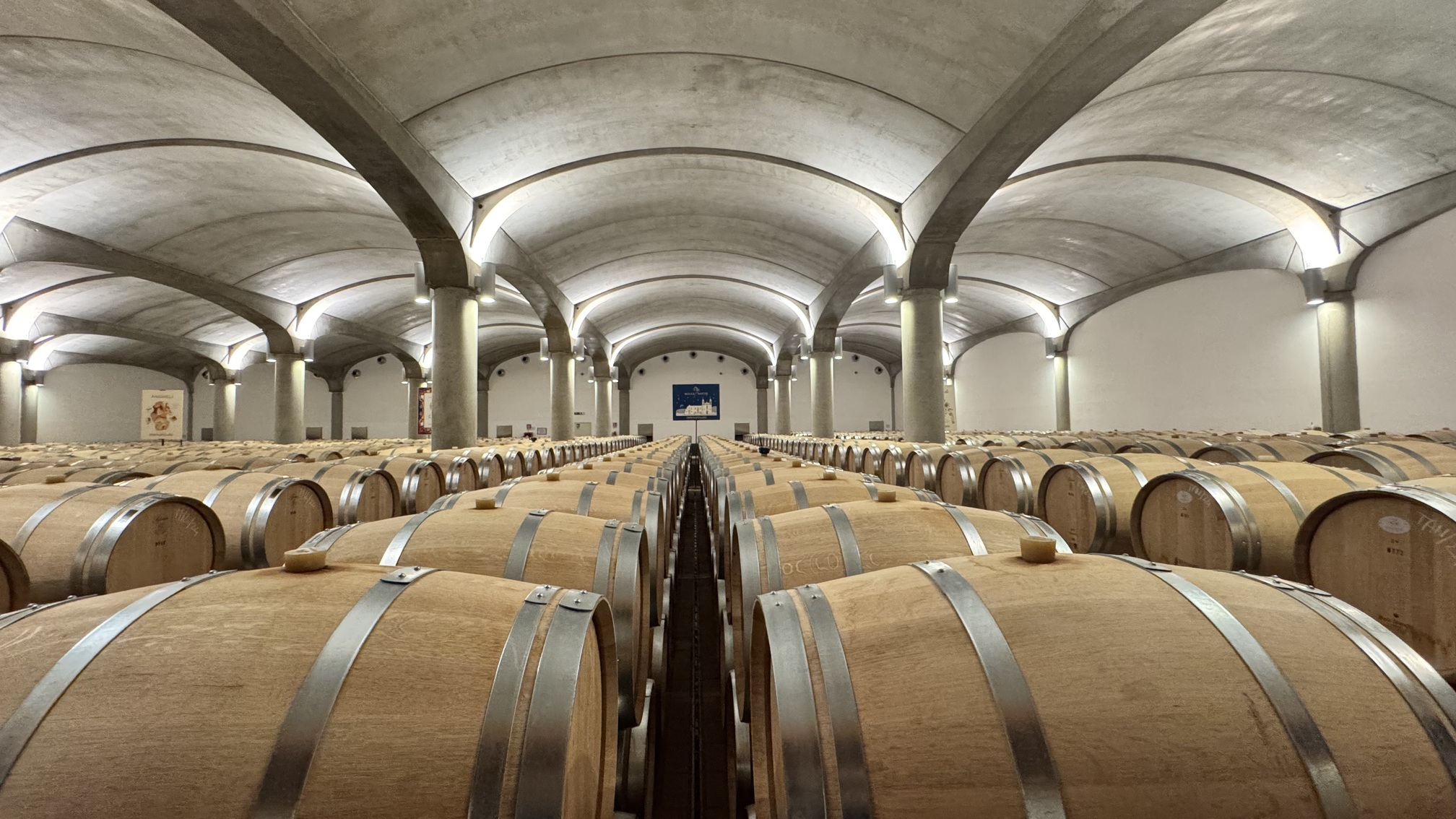
In the cellar with Donnafugata: a journey through barriques, toastings and ageing times
18
Jan 2026
Condividi su:
A tasting focused on barrique work, guided by winemaker Antonino Santoro, “cellar master”, featuring wines still in evolution. A technical and comparative tasting that highlights how toasting, barrel ageing and the duration of ageing influence structure, tension and ageing potential.
It is a sensory laboratory where wood becomes a tool of precision. The barrique acts on the expressive level, in a calibrated manner, with the aim of accompanying the identity of the wines without overlapping it.
The work on wood is structured as an experimental map, built around French oak and a calibrated use of toastings, from light to medium, up to more intense versions.
Tancredi 2024 Ageing of approximately 14 months in 225-litre fine-grain French oak barriques, with medium and light toastings, 55% new and 45% second fill.
For Tancredi, wood is an integral part of the wine’s architecture. The protocol involves alcoholic and malolactic fermentation in stainless steel at Contessa Entellina, with blending carried out before the wine enters wood, which takes place in Marsala between January and February. At the end of winter, the wine leaves the barriques and is cold-stabilised for one month at 7 °C in concrete tanks, then bottled in June. Market release takes place after 24–30 months.
The barrique trials outline different trajectories: Medium toasting, oak seasoned for 24 months: well-defined spiciness, hints of oregano, well-integrated tension. The wine is focused, already readable, with wood that supports without rigidity. Light toasting, oak seasoned for 36 months: more austere profile, almond-like note, slow and progressive expression, with more marked salinity. Medium toasting, oak seasoned for 36 months: greater density, bitter fruit, mint, undergrowth and humus. Here the wood builds volume and depth, making the wine more compact.
Pinot Nero 2024 The Pinot Nero, sparkling wine base used for the Brut, is aged in 2021 barriques (fourth fill) of 228 litres. The result is surprisingly balanced: the wine is already harmonious and composed.
Nerello Mascalese 2024 The Nerello Mascalese, sparkling wine base used for the Gold, from barrique shows a more restless character. The profile is balsamic and vertical, with a drive still in the integration phase. It is a wine that asks for time, to be waited for, requiring further bottle ageing to relax and reach a more complete synthesis.
Chardonnay Fifteen percent of Chardonnay (destined for Vigna di Gabri) aged in second-fill barriques, without malolactic fermentation, stands out for the precision of the winemaking approach. On the nose, citrus notes emerge, accompanied by a well-integrated buttery sensation, while the finish is bitter and saline, very focused. The profile is dynamic, with a persistence that reinforces the wine’s personality.
Chiarandà 2025 For Chiarandà, Chardonnay, first- and second-fill barriques alternate, with the presence of new wood. Acidity is around 6 g/l. The profile is less citrus-driven; the wood works on spacing, giving breadth. On the nose, a fine balsamic character emerges, accompanying a rounder and more polished palate.
Mille e una Notte 2024 It is with Mille e una Notte that the barrique tasting becomes fully comparative. Everything takes place in new barriques, with marked differences in toasting levels and ageing duration.
Medium toasting, oak seasoned for 24 months: dry and spicy, with evident pepper notes. Syrah emerges clearly, Petit Verdot remains more in the background, while Nero d’Avola works on dark fruit expression. Light toasting, oak seasoned for 36 months: a more rigid and green profile, but also more delicate and restrained. Medium toasting, oak seasoned for 36 months: greater density and depth, with a firmer grip. Medium toasting favours earlier openness, with initially sweeter spacing followed by a fine, bitter-edged, balsamic finish, with returns of oregano. Medium-long toasting, oak seasoned for 24 months: a sample that is already balanced and readable. Petit Verdot expresses itself with mentholated and balsamic nuances, with notes of cocoa and chocolate.
Within the framework of medium toastings, the wood works on a more solid structure, with evident tannins, a well-defined Petit Verdot and hints of green tea, favouring strength and depth rather than immediacy.
The wine remains in wood until March, is bottled in June and continues ageing for 36 months, confirming a vision that prioritises depth and time.
This cellar tasting tells the story of processes. It is the direct experience of how the same wine can change identity depending on toasting level, ageing duration and barrel passage.
Tiziana Mirabella
🔗 Discover more about Donnafugata and its wines: 🌐www.donnafugata.it/